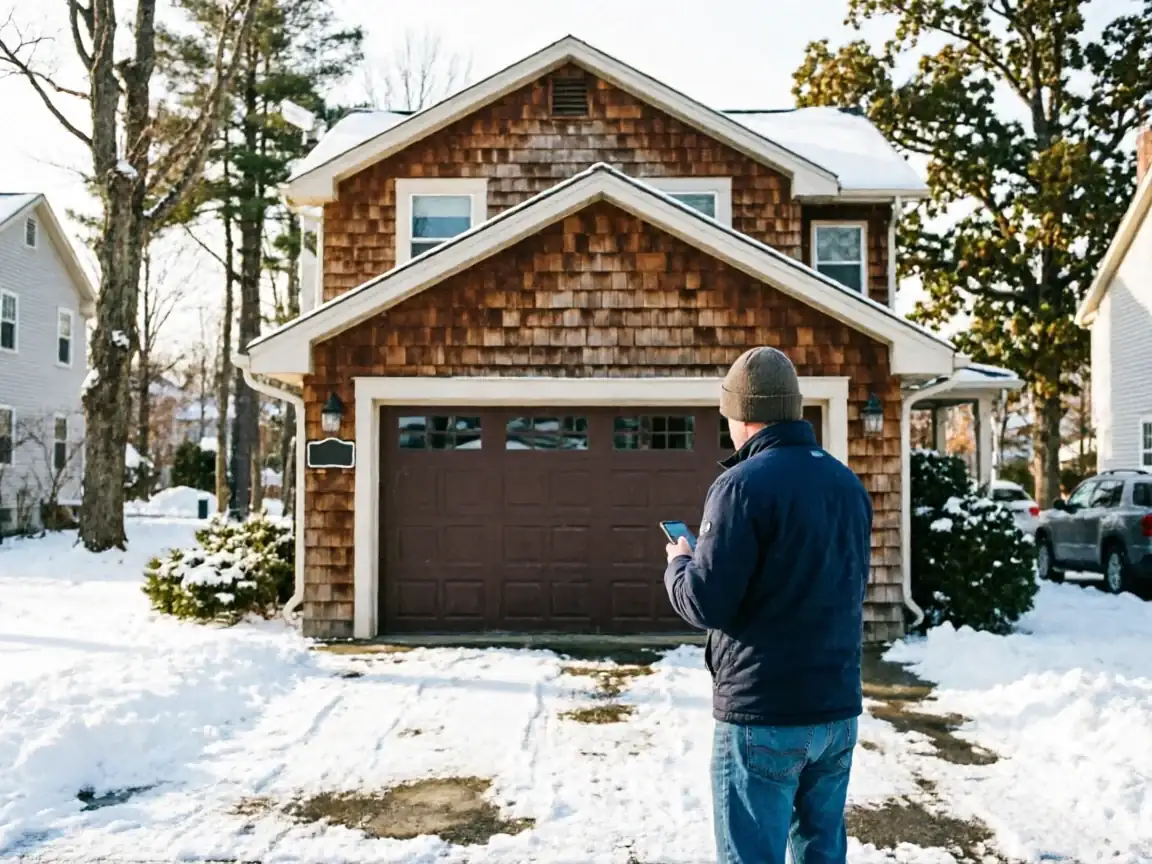
What Is Going On
Most of the noise complaints we hear around Butler come from doors original to houses built between 1938 and 1999, with the bulk of that stock going up in the 1960s and 70s. That matters because a door is a system of parts aging together, and a house from the Johnson-administration era is now asking its original torsion spring, its original rollers, and its original track brackets to all hold on at the same time.
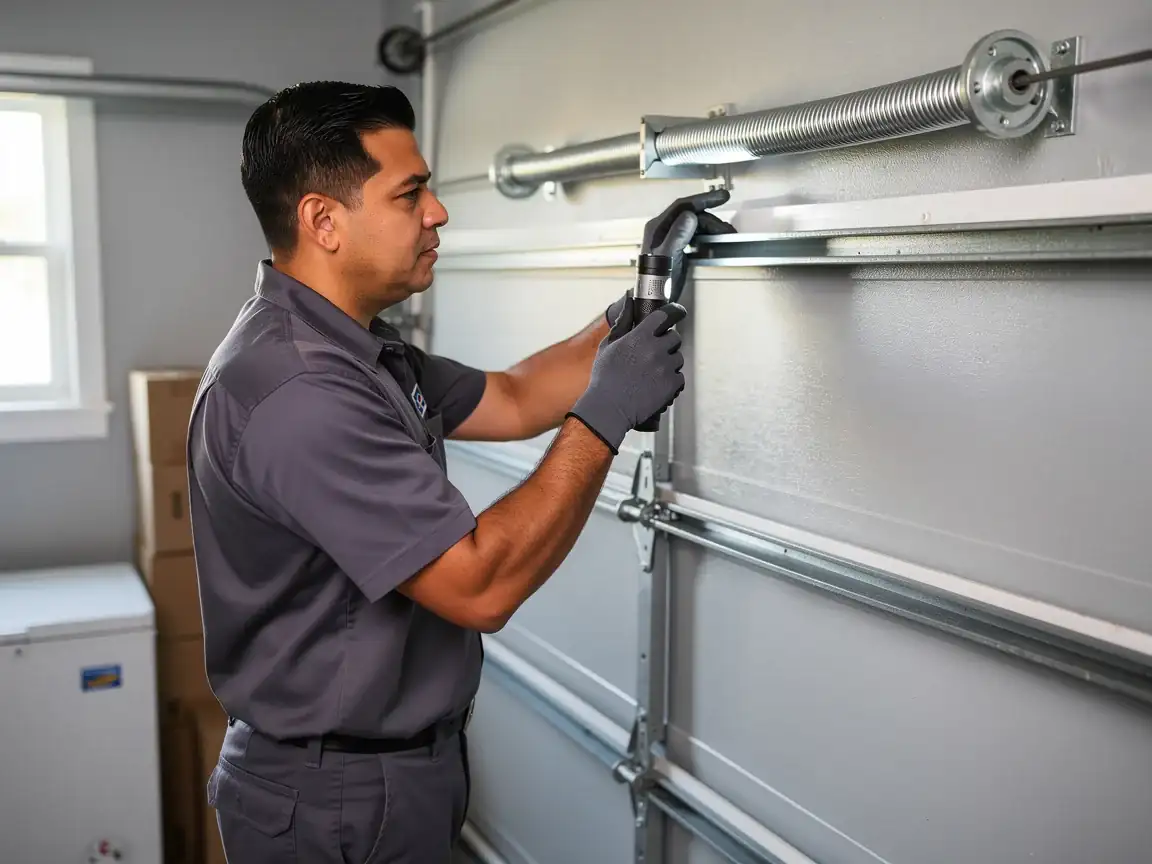
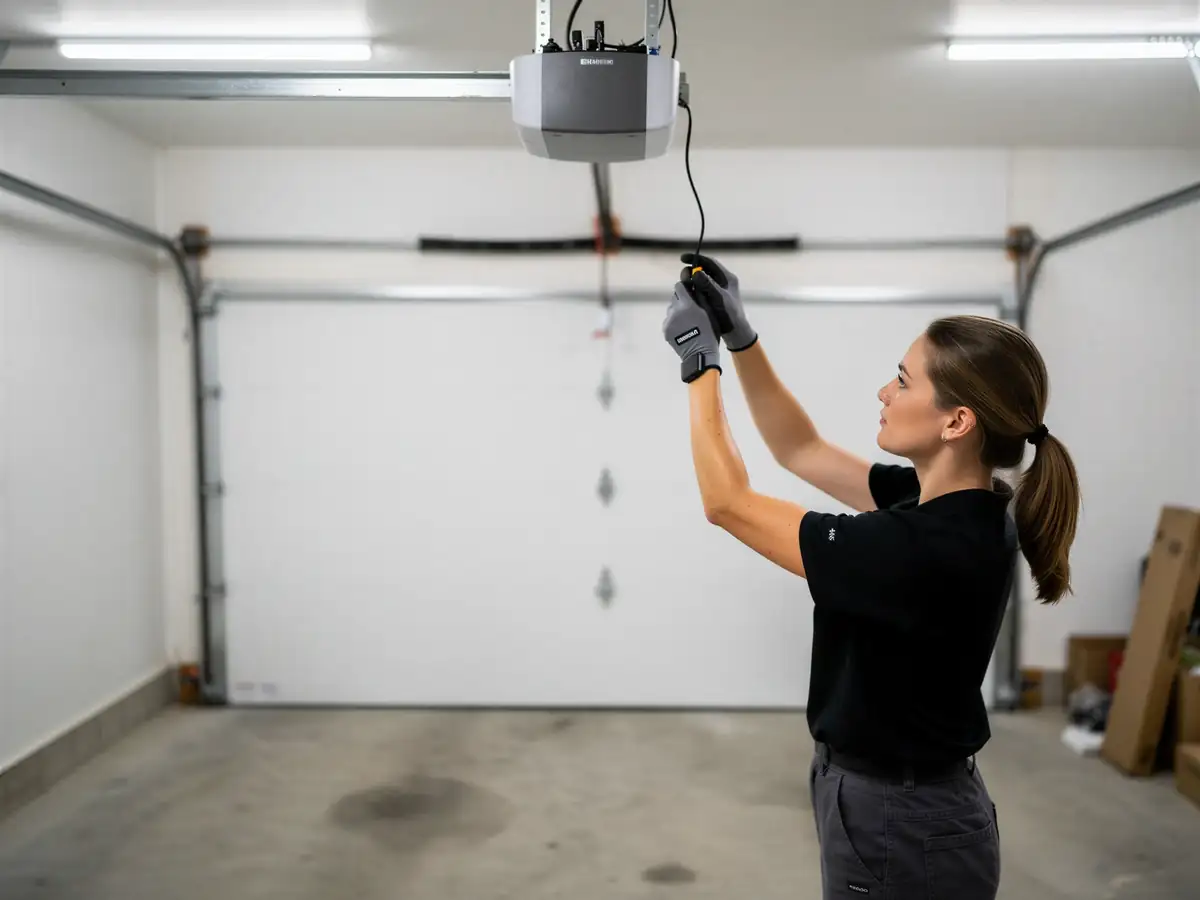
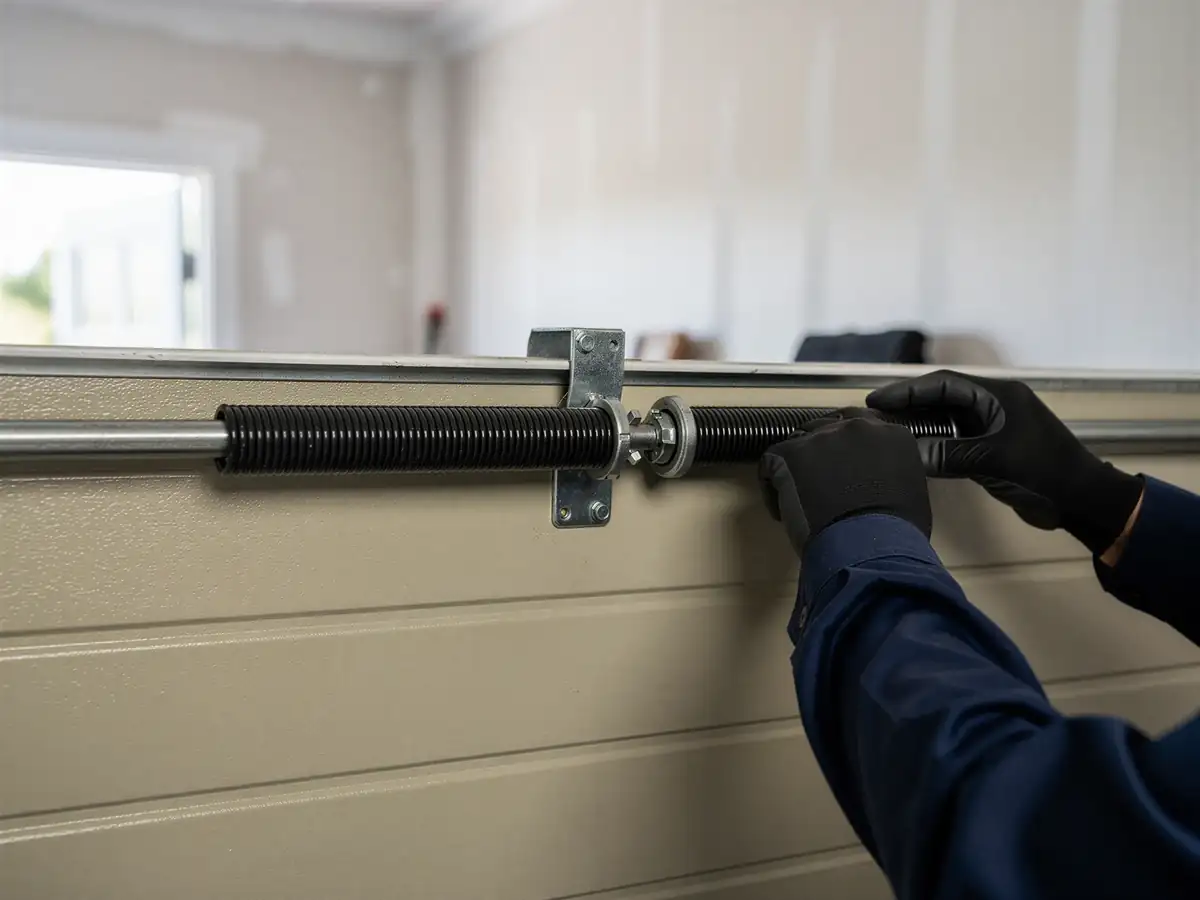
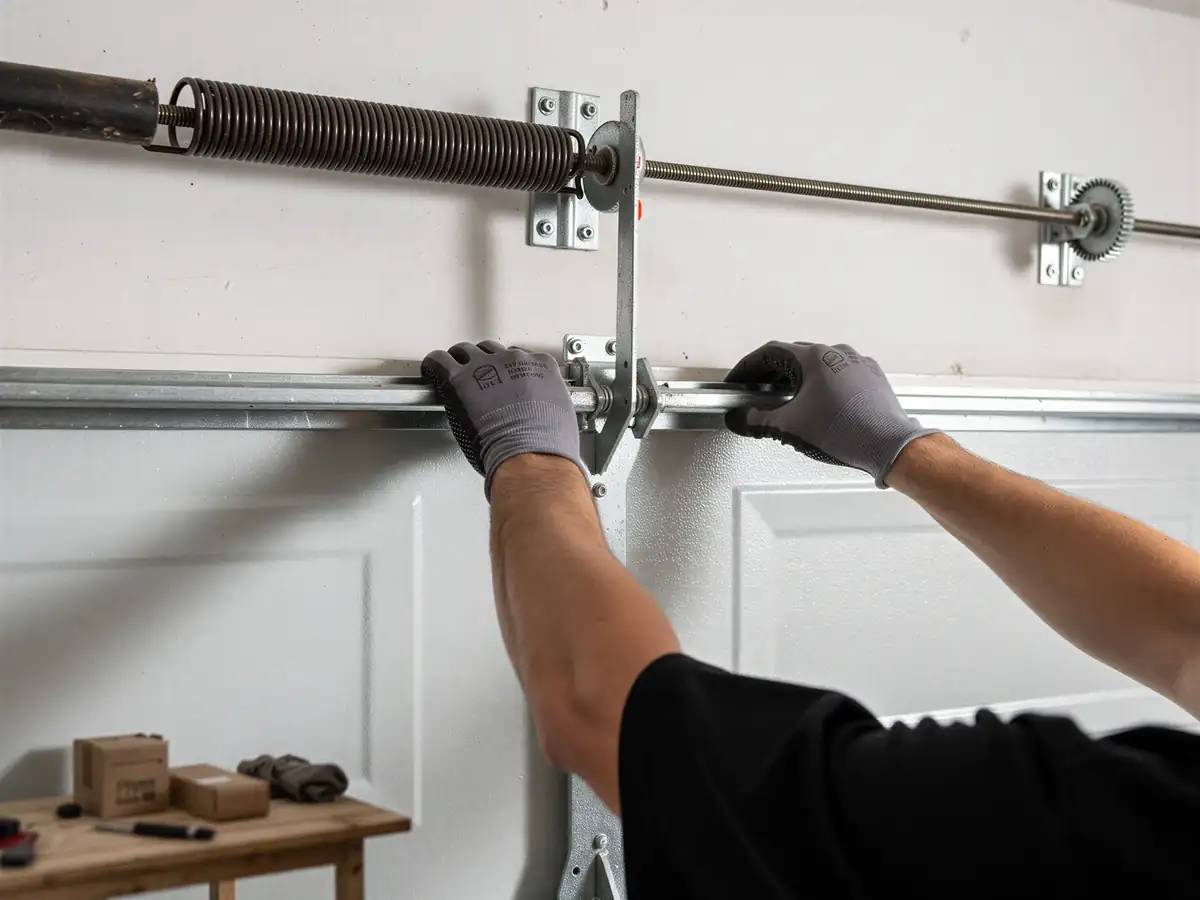
A slamming sound at the top of travel usually means the door isn't balanced anymore - the spring has lost tension relative to the door's weight, so the opener is doing the lifting the spring used to share. A grinding or scraping sound as the door moves is almost always a roller problem: steel rollers on decades-old track wear a groove into the track itself, and once that groove is there, every pass gets louder. A sharp pop, usually once, usually followed by the door refusing to open, is a cable or spring letting go.
None of these sounds are cosmetic. They're the door telling you which part is failing first. In a 43-town service area where a lot of the housing shares the same build era, the pattern repeats house to house - it's not bad luck, it's the stock.
Checking It Yourself
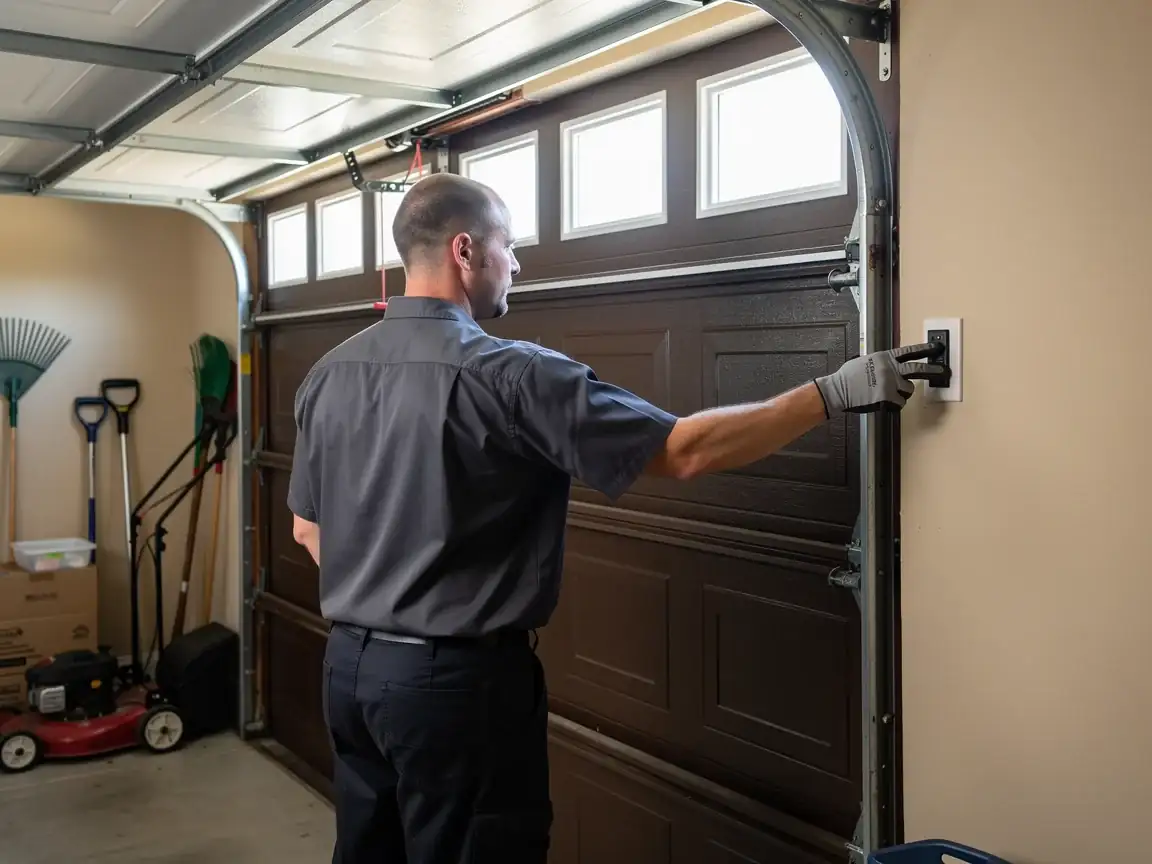
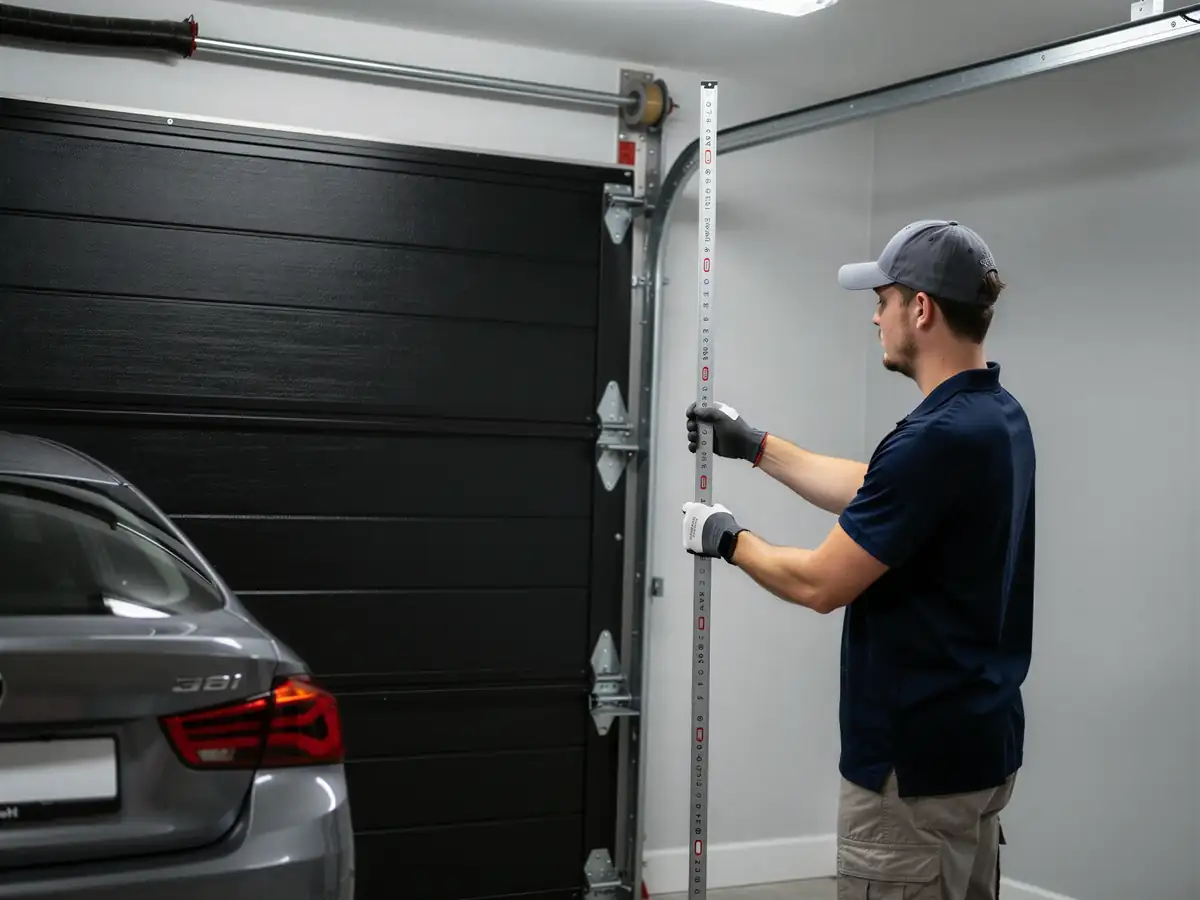
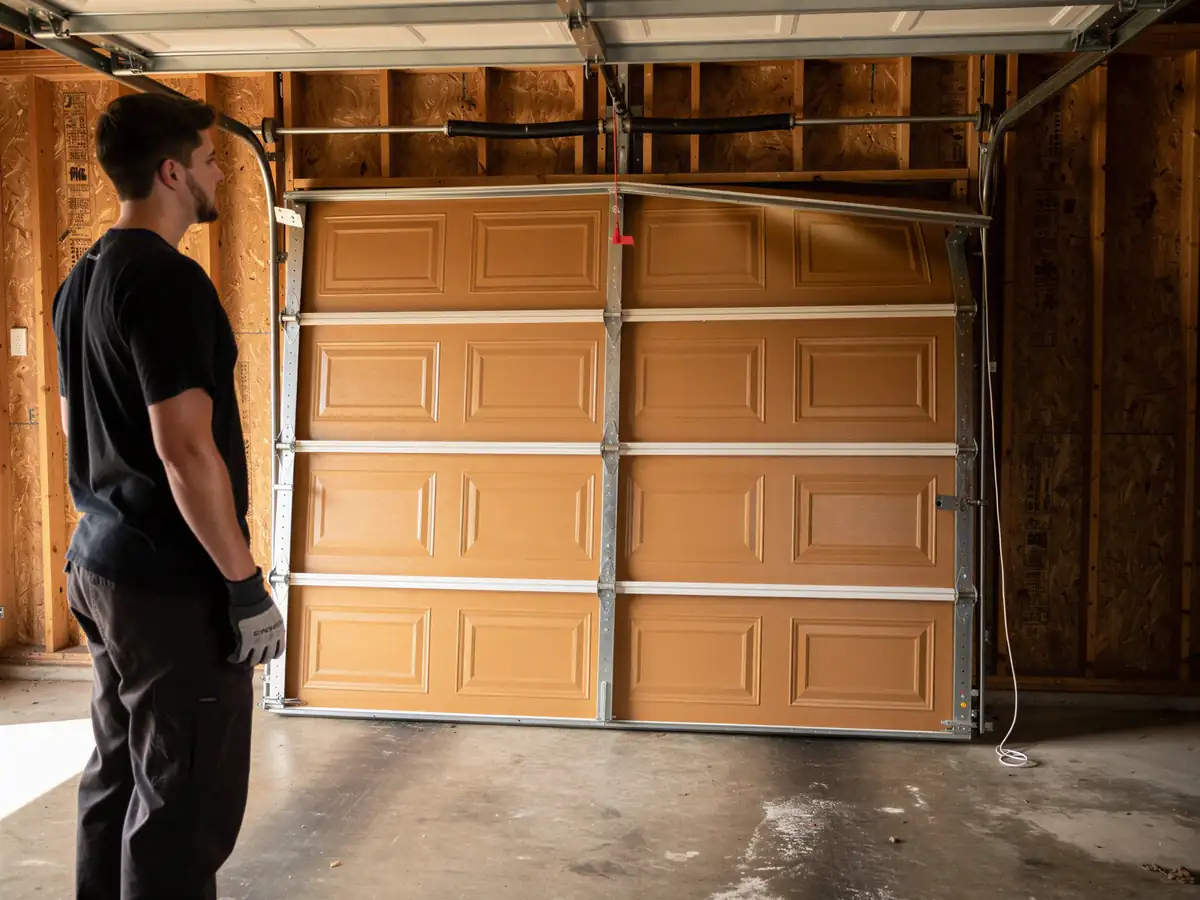
Before you call anyone, there's a cheap check that tells you a lot: pull the release handle, disconnect the opener, and lift the door by hand to about waist height. Let go. A properly balanced door stays put or drifts slowly. A door that crashes down or flies up means the spring is off, full stop, and that's not a DIY fix - torsion springs under tension have put people in the ER.
While you're in there, look at the rollers. If they're steel and original to a house from the 1960s or 70s, they've likely done 50-plus years of cycles without replacement, which is far past any reasonable service life even for nylon rollers rated for less wear. Grooved or flat spots on the roller face explain a grinding sound without needing a spring diagnosis at all.
Check the track for gaps at the brackets, especially near the bottom section - loose lag bolts into an older stud wall will work themselves out over enough winters and that shows up as a rattle or a bang on the up-stroke.
What you shouldn't do: touch the spring itself, cut a cable, or force a door that's binding. If the noise is new and the door still moves, you have time to get it looked at properly. If the door is stuck shut with a car inside, that's a different call.
How Local Conditions Play In
Butler sits in a cold-severe climate band
And that changes what noise means in January versus July. Steel contracts in cold, and a track that was shimmed loose enough to rattle in August can bind tight enough to groan in February. Lubricant that worked fine in summer thickens in sustained cold, and a slow, labored sound on opening - rather than a sharp grind - often points to grease gone stiff rather than a worn part.
Houses in this area built mid-century weren't always insulated at the garage the way newer builds are
So temperature swings inside the garage itself can be wider than people expect, and the door hardware feels every one of those swings. A spring that's borderline in October can finish failing on the first hard freeze, because cold steel is less forgiving steel.
If your door gets noisier specifically after a cold snap and quiets down again once it warms up
That's a strong sign the issue is tension and lubrication rather than a broken part - worth checking before you assume the worst.
When It Stops Being a DIY Job
A single pop followed by a door that won't budge is a broken spring or cable - call, don't troubleshoot further. A door that's suddenly heavy to lift by hand, even slightly off from how it felt a month ago, means the spring is losing tension and will eventually fail outright; better to deal with it on your schedule than on a Tuesday morning with the car trapped inside.
We'll be honest about one limit: if the track or rollers are original to a house built in the 1960s or 70s and showing heavy wear, patching one roller or one section of track is often a short-term fix. Given how long that hardware has already run, a full roller and track replacement usually costs less over the next few years than repeated service calls on parts that are all wearing out together.
Any grinding that's gotten noticeably louder over a few weeks, any door that drifts when it should hold still, or any bracket pulling away from the frame - those are calls to make now, not maintenance to defer through another winter.