What Is Going On
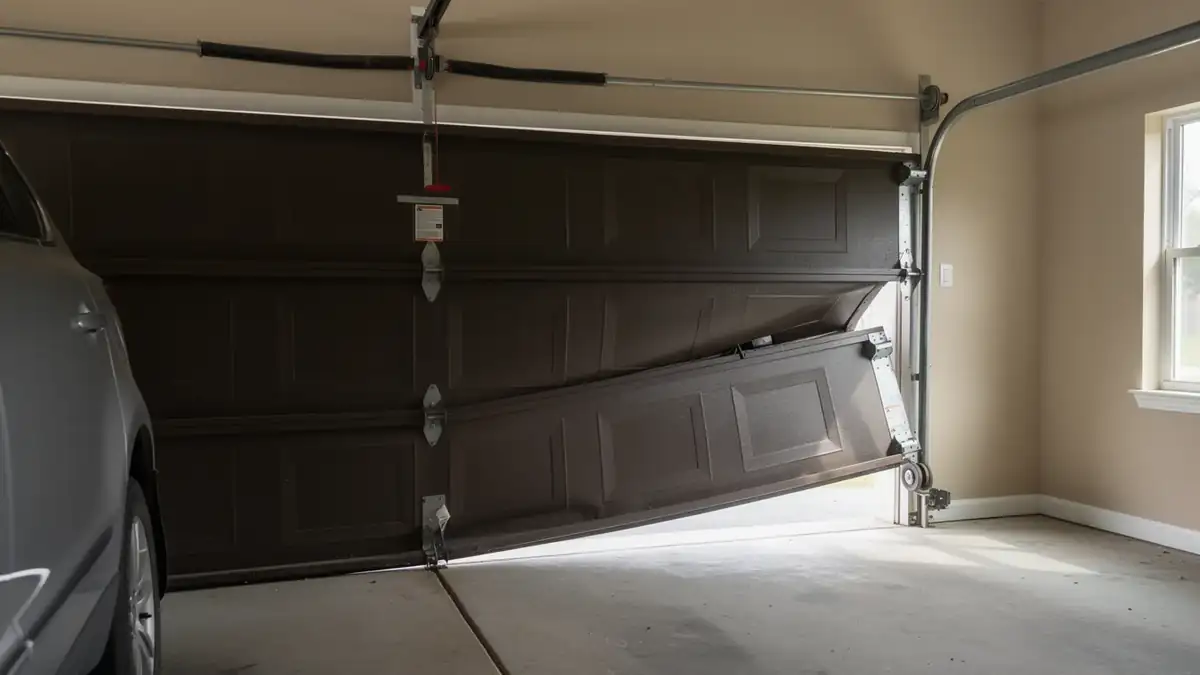
A door comes off track when a roller leaves the channel instead of riding straight through it. Around Butler, that usually starts with the hardware, not the door itself. Housing stock through this service area runs 1938 to 1999, with the median build year sitting at 1973 - so a lot of track brackets, roller wheels, and cable drums on these houses are original or close to it. Steel track bends. Brackets loosen from the jamb over fifty-plus years of seasonal wood movement. Once a bracket shifts even a quarter inch, the roller starts riding the edge of the track instead of the center, and one hard gust or a slammed-shut door knocks it the rest of the way out.
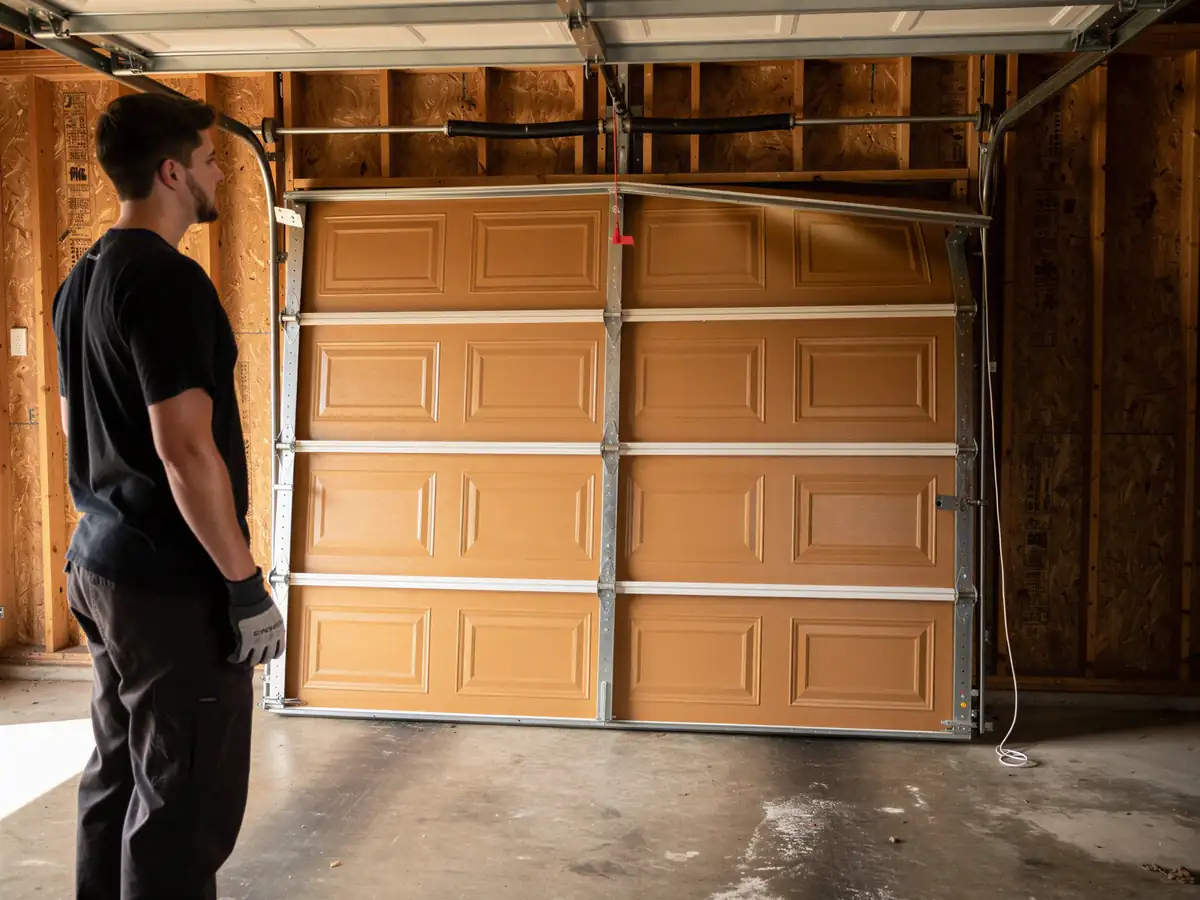
It's also common for a cable to jump its drum on one side, which pulls the door crooked as it travels. From the garage floor that can look identical to a bent track - the door hangs at an angle and binds partway up. Both problems show up more on older single-car openings than on wider doubles, since single doors in this area tend to be the original units from the build era and have had less hardware turnover.
Most of the time this isn't catastrophic. It's wear catching up with hardware that's been doing its job since the Nixon administration.
Checking It Yourself
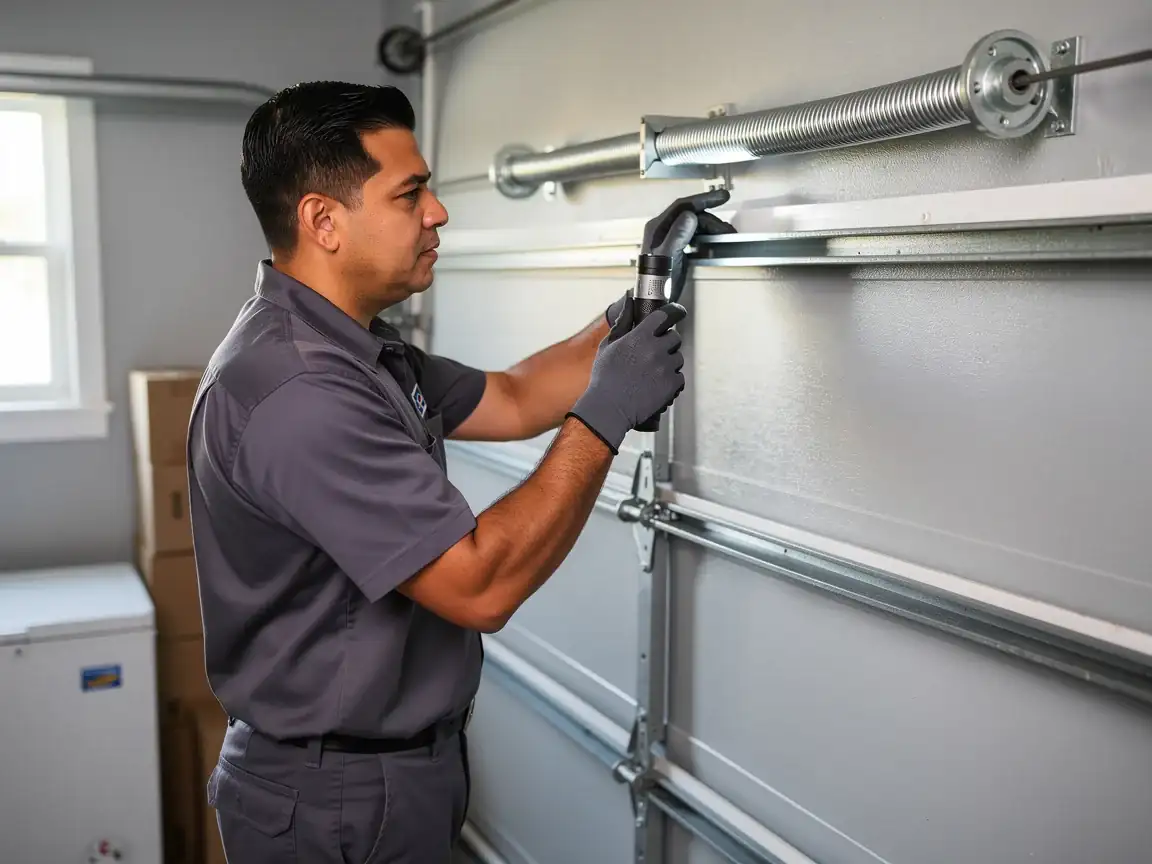
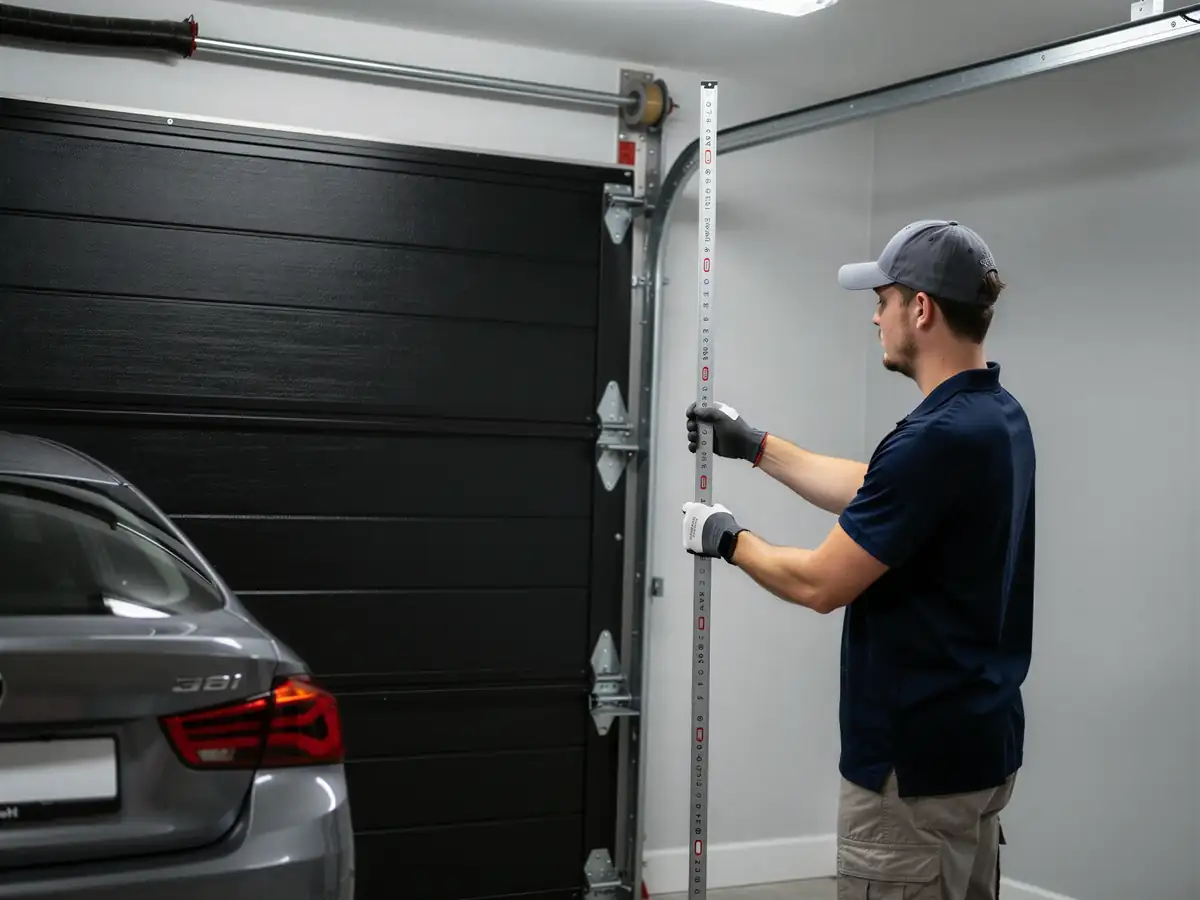
With the opener unplugged, pull the door down by hand to about waist height and look at both tracks side by side. If one side bows outward or the gap between roller and track widens as you lower it, that's your bent section - not a mystery noise, not the opener. Run a hand along the vertical track where it meets the horizontal curve near the ceiling; this is the spot that takes the most stress and bends first on the older single-piece doors common in this area's 1960s-70s stock.
Check the lag bolts holding the track brackets to the framing. On a house built in that 1938-1999 window, framing has shrunk and settled enough that these bolts back out over time. A bracket you can wiggle by hand is a bracket that will let the track walk sideways under load.
Listen for a popping or grinding sound right before the door binds - that's often a roller that's already partway out of the channel, still catching enough track to move but about to let go entirely. Don't keep running the opener through that sound hoping it clears itself; it won't, and it usually gets worse the next cycle, not better.
How Local Conditions Play In
This area sits in a severe cold climate band
And that matters more for track alignment than most homeowners expect. Steel track contracts in deep cold, which tightens tolerances that were already loose from age. A bracket that's barely holding on in August can finally let go in January, right when the opener motor is also straining against stiff, cold grease in the rollers. That combination - contracted track plus a sluggish roller - is a common reason doors jump track on the first hard cold snap of the season rather than gradually over the fall.
Temperature swings also work on the wood framing the track is bolted to
A house built in the 1960s or 70s, which describes most of the stock across this area's named communities, has gone through six decades of freeze-thaw cycling in the jamb lumber. That slow movement is exactly what loosens lag bolts and nudges brackets out of plumb over time, rather than all at once.
If your garage is unheated
Which most are in houses from this era, expect the hardware to run tighter and stiffer from roughly late fall through early spring. That's the stretch when a marginal bracket or a slightly bent track finally fails.
When It Stops Being a DIY Job
Reset the roller back into the track yourself only if the door is down, the opener is unplugged, and the cable is still on its drum. If a cable has jumped or snapped, or if the door is up and stuck crooked under spring tension, stop - that's not a bracket tightening job anymore, that's spring and cable work, and it's where people get hurt.
We don't try to straighten badly bent track sections in place. Past a certain bend, the metal has work-hardened and will just bend again at the same spot within a season; replacing that section is the honest call, not re-bending it and billing you twice.
If you're not sure whether you're looking at a loose bracket or a bent track, a call is cheaper than a guess, especially on houses in this area where the hardware is original enough that one wrong pull can take out a bracket that's barely hanging on anyway.