What Is Going On
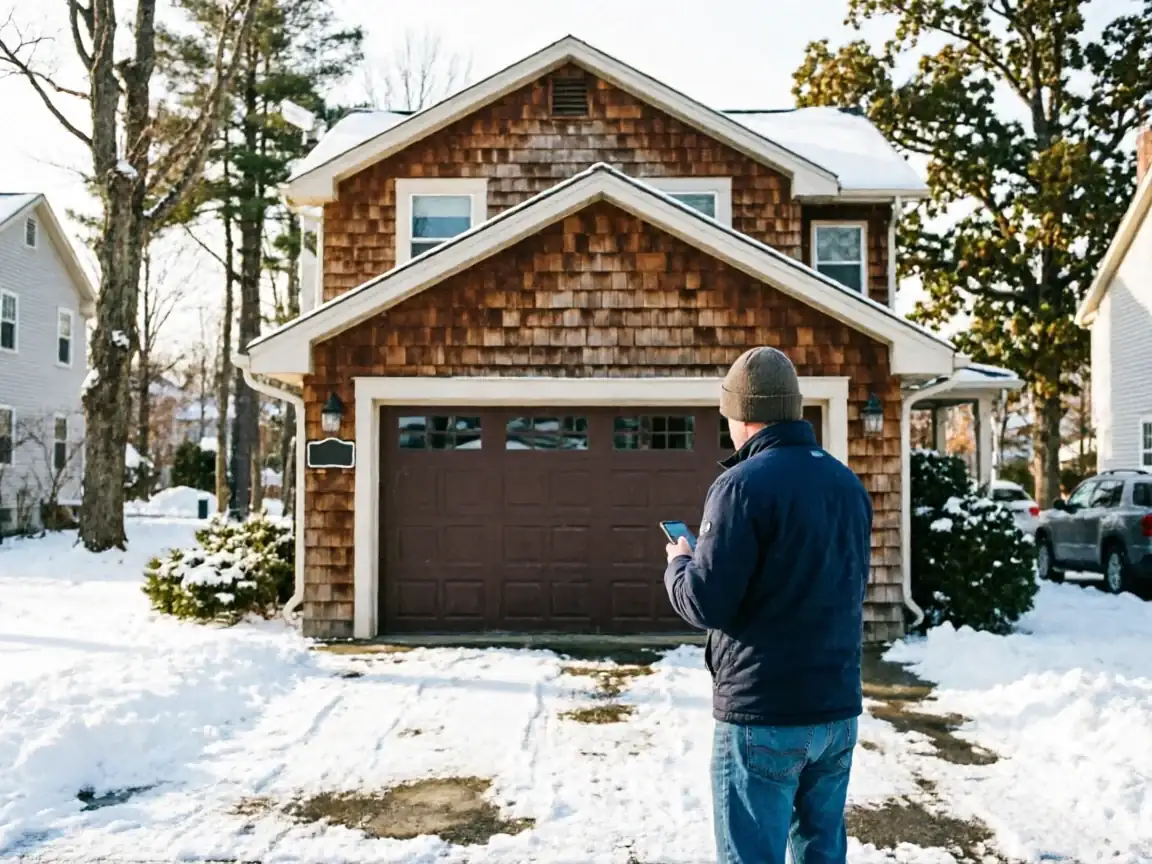
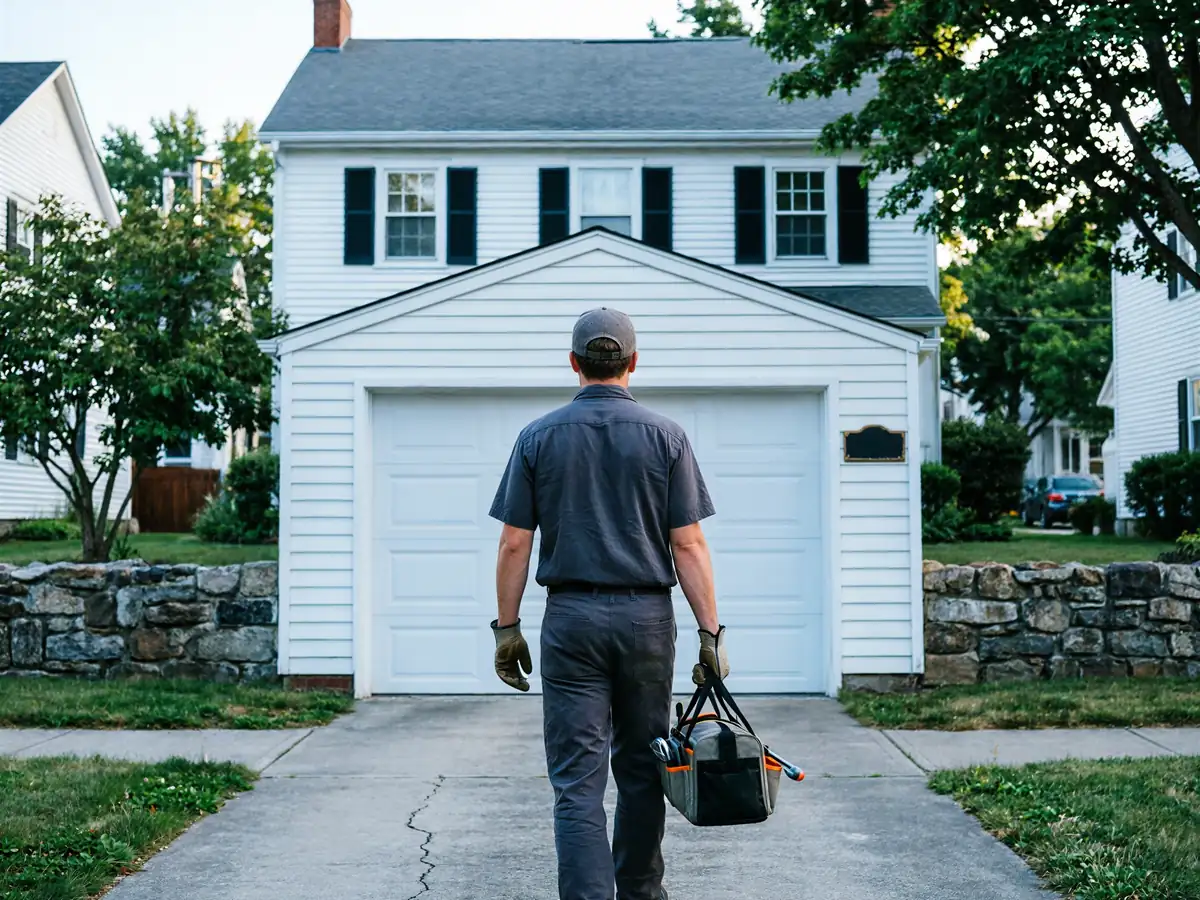
Most of the trouble calls we get trace back to one of two things: age or cold. Housing in this service area was built mostly between 1938 and 1999, with the median landing around 1973, and the bulk of it clustered in 1960s and '70s construction across the 43 named areas we run trucks through. That means a lot of original torsion springs, steel tracks that have never been re-leveled, and openers that are a second or third replacement bolted onto hardware from the Nixon administration. A door that's sagging on one side, or a spring that lets go with a bang, is almost always a hardware-age problem before it's anything else. Before we touch a panel we check the build era of the house, because a 1973 door and a 1998 door fail in different ways and need different parts. We also check whether the garage is attached or detached, since the service area runs from closer-in neighborhoods like Oak Hills and Meridian out to more rural pockets near Clearfield, and an unheated detached garage ten miles out behaves nothing like an attached one closer to town.
Checking It Yourself
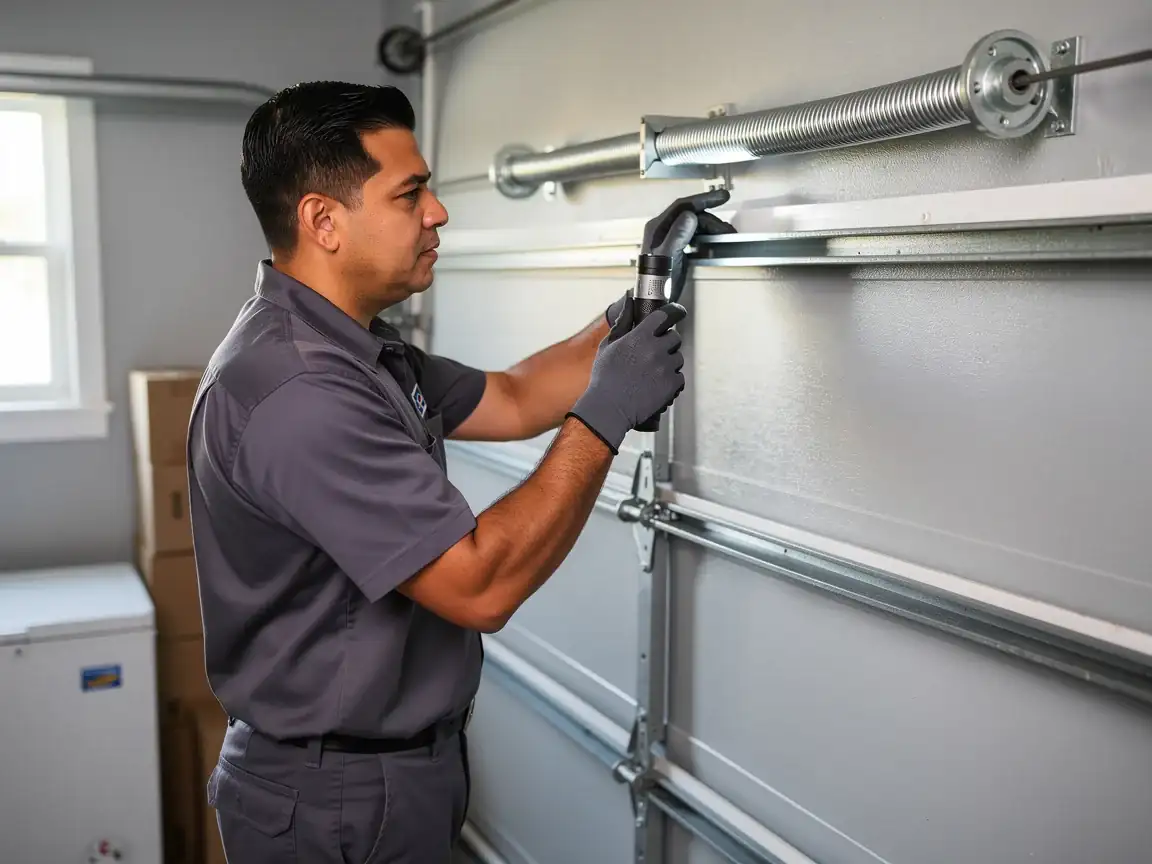
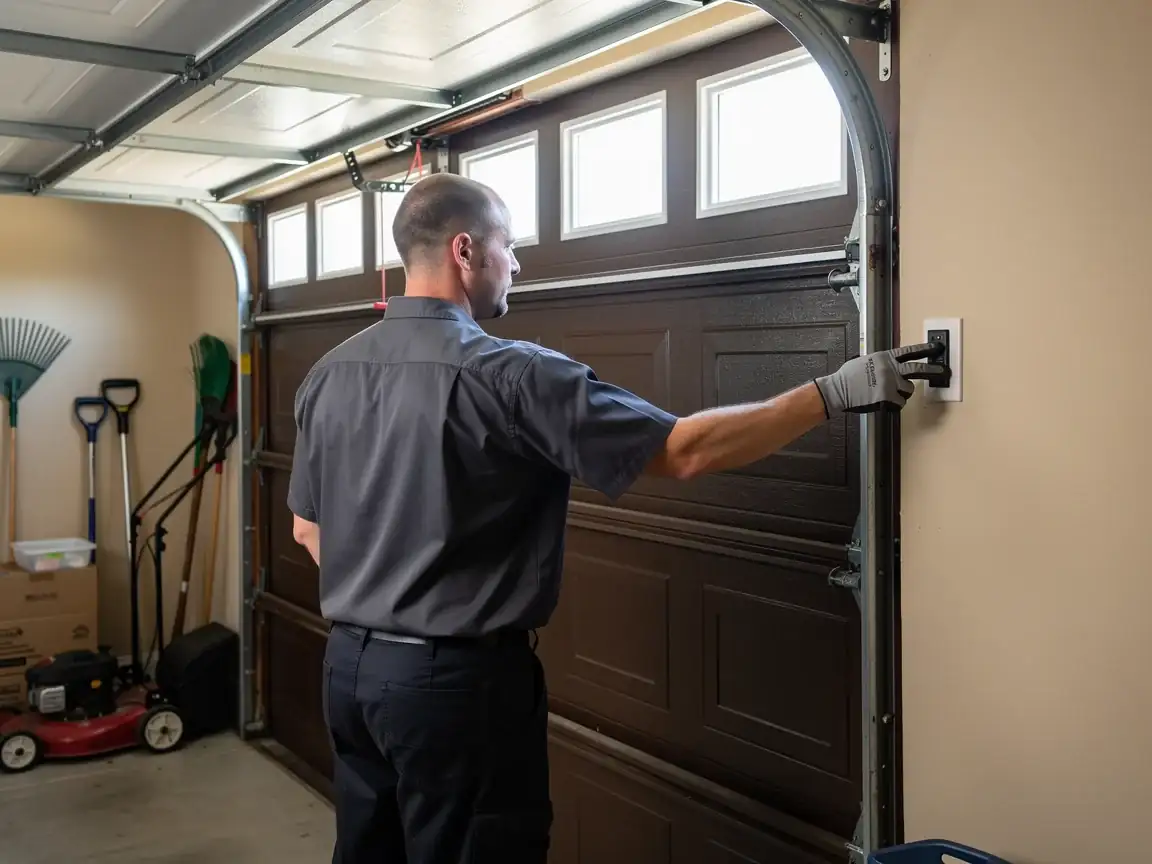
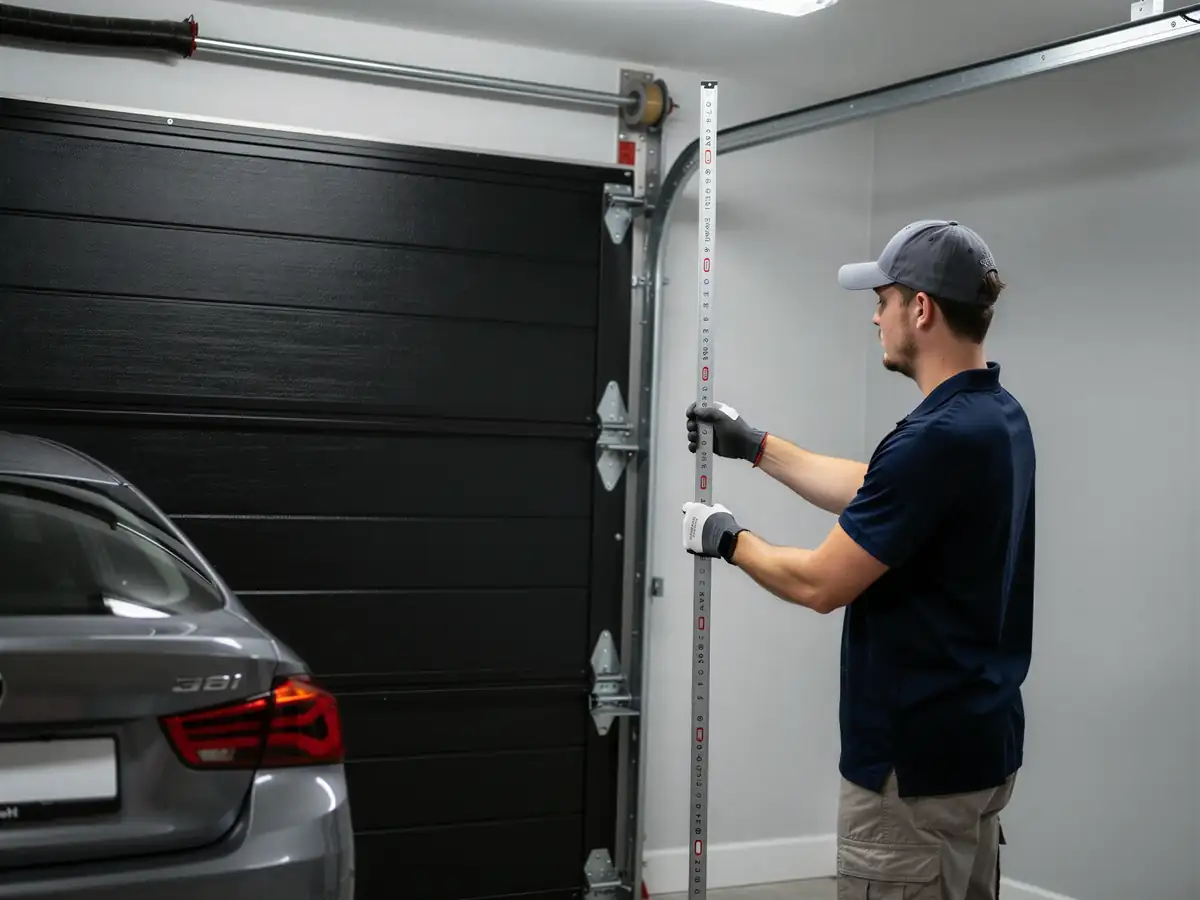
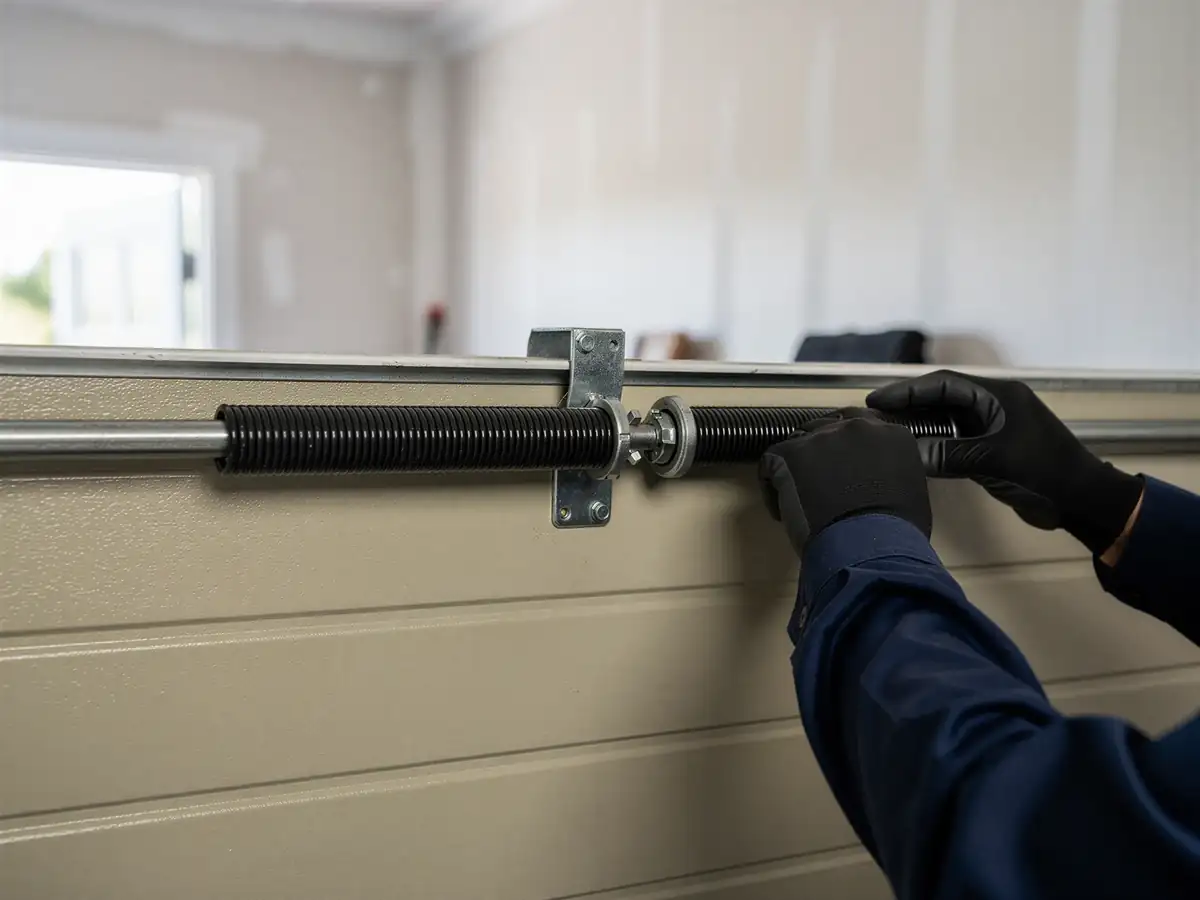
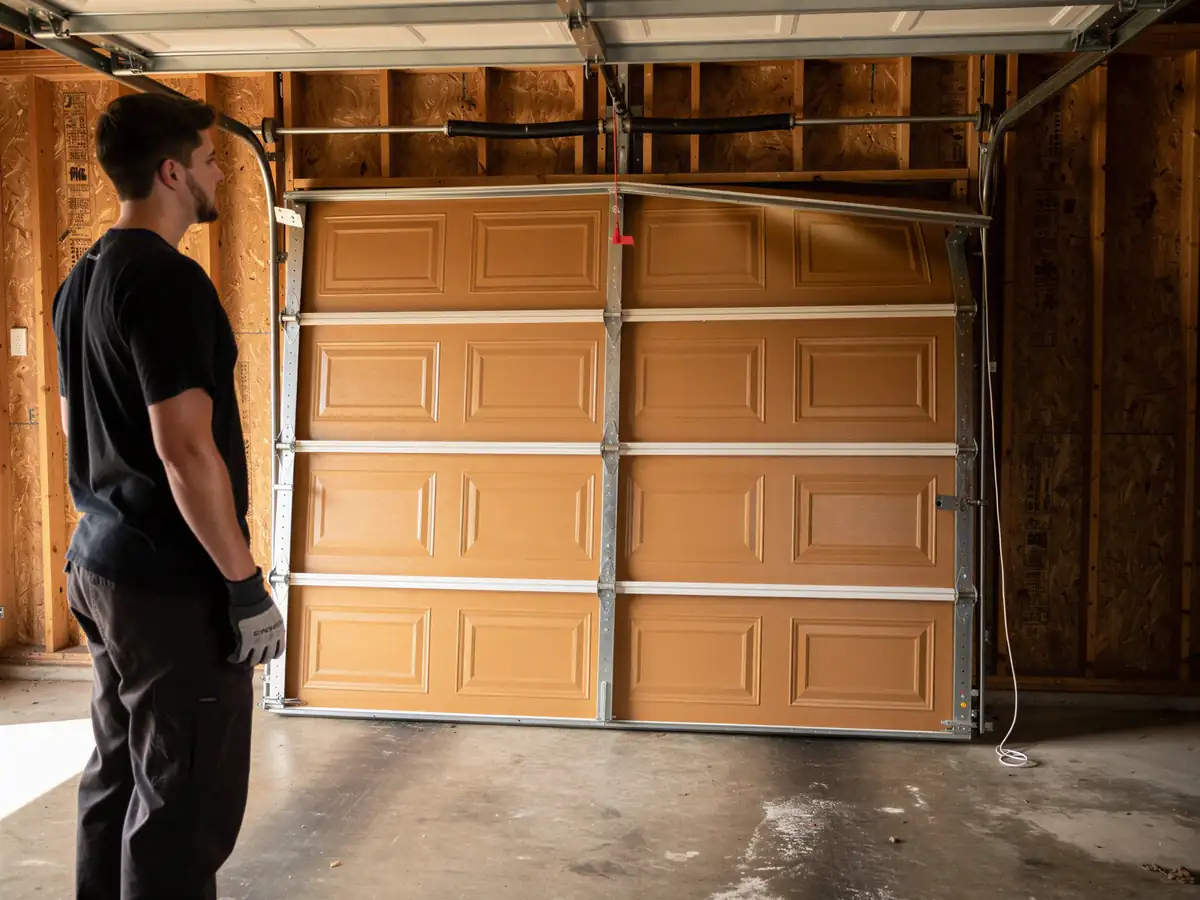
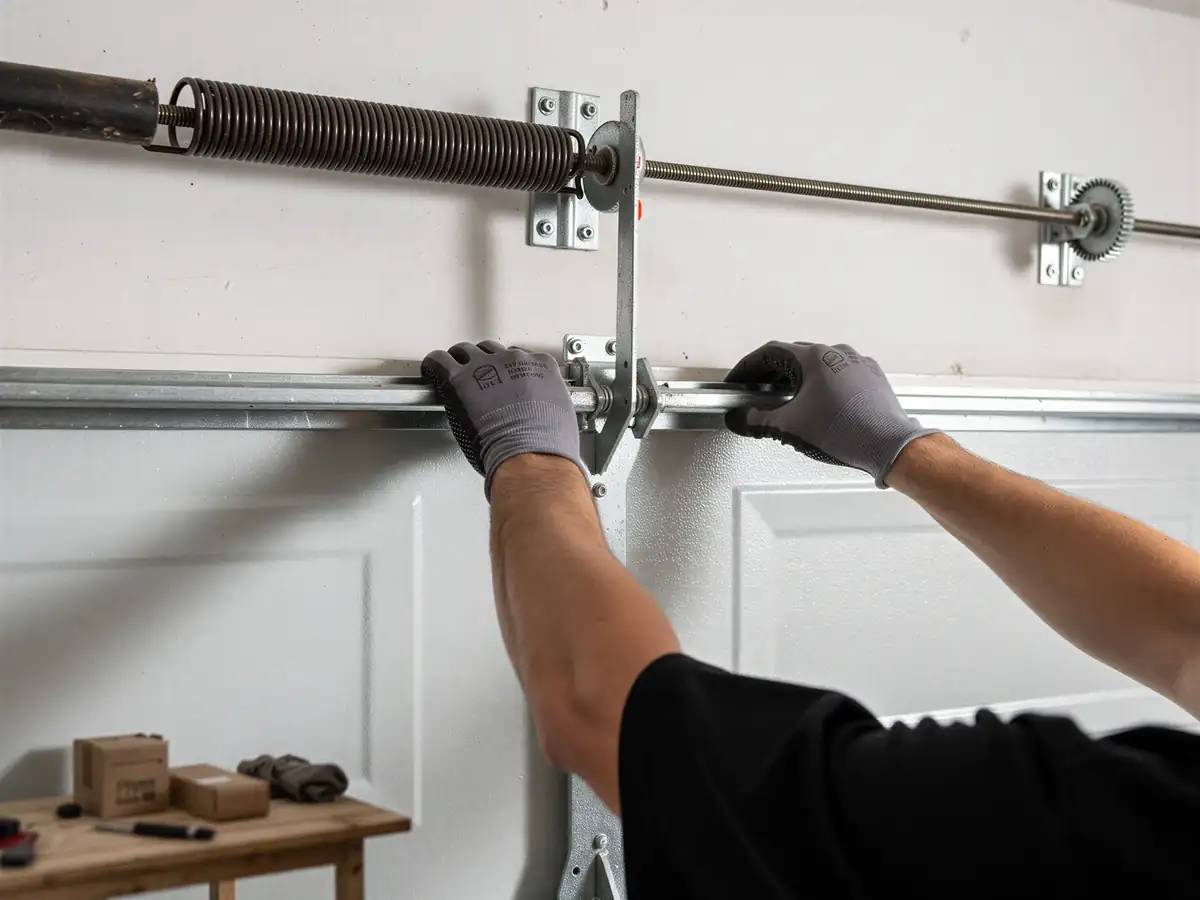
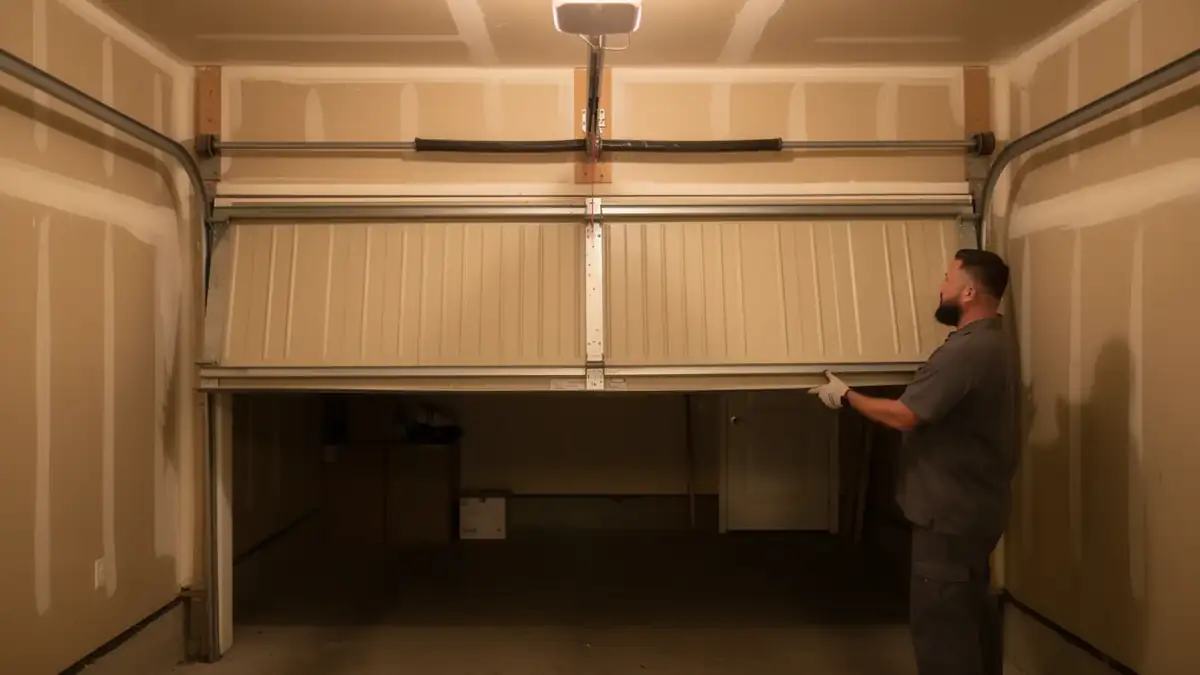
Before you call anyone, there are a few things you can look at yourself. Pull the emergency release cord and move the door by hand - if it's hard to lift or drops on its own, the spring is losing tension, not the opener. Look at the torsion spring above the door: a visible gap in the coil means it's broken, full stop, and the door should not be run on the opener until that's fixed. Check the tracks for rust at the bottom few feet, which is common on houses from the 1960s-70s stock where the original galvanizing has worn thin after decades of winter salt spray off the driveway. Listen for grinding when the door moves - that's usually rollers, and on a house this age they've likely never been swapped. What you shouldn't do is loosen or adjust the spring itself; that's the one place where a DIY mistake does real damage, to the door and sometimes to the person standing under it.
When It Stops Being a DIY Job
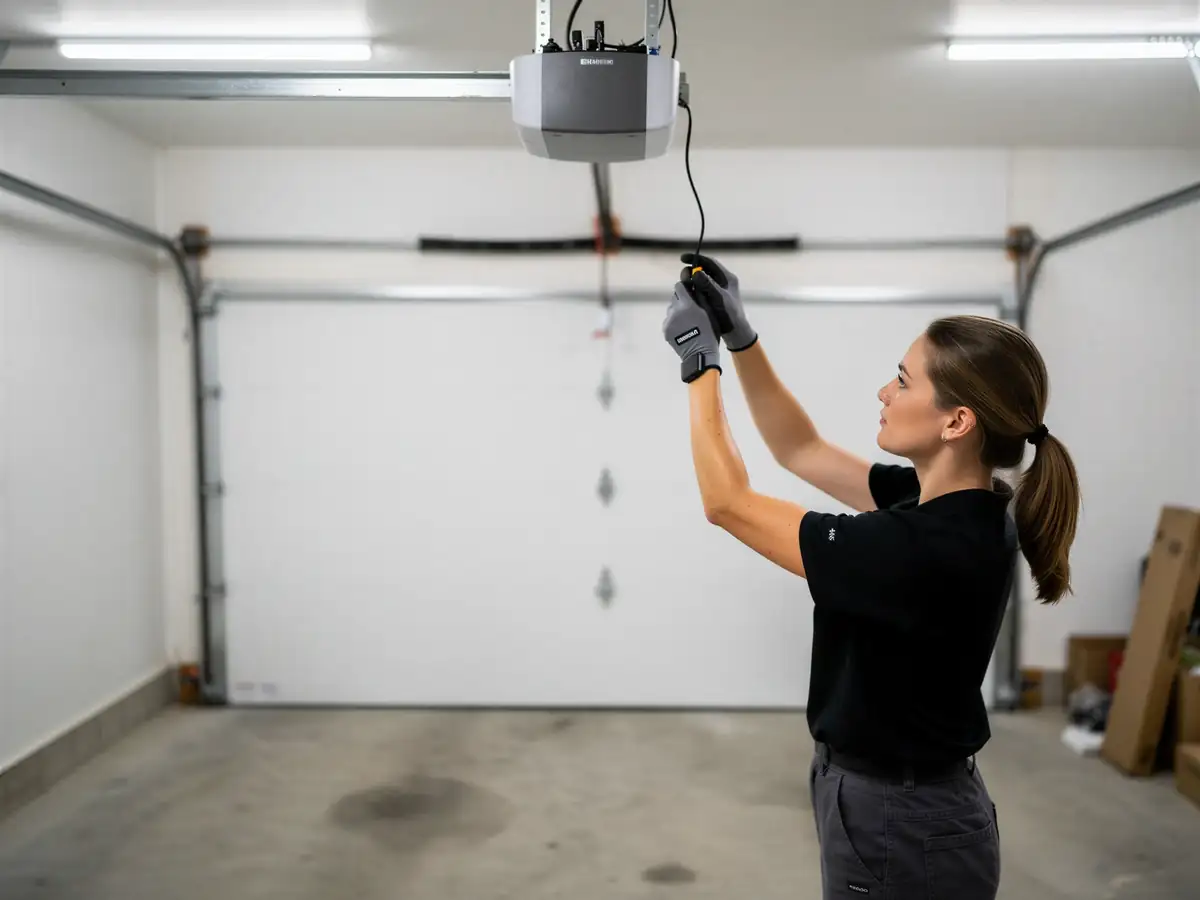
A broken torsion spring is not a DIY repair, full stop - the tension involved can cause serious injury, and we won't talk anyone through doing it themselves. Bent track, a cable off the drum, or an opener that runs but won't fully close are also calls, not projects. Where we're honest with people: if a door is original to a house built in the 1960s or '70s, parts for that exact model are often long discontinued, and a repair quote can end up close to the cost of replacing the unit outright. We'll tell you when that's the case instead of patching something that'll fail again in a year. With 28,947 owner-occupied houses across this service area and a median household income of $72,842, most of our customers want straight answers about repair versus replace, not an upsell - that's the call we try to make honestly every time.