Why It Happens Here
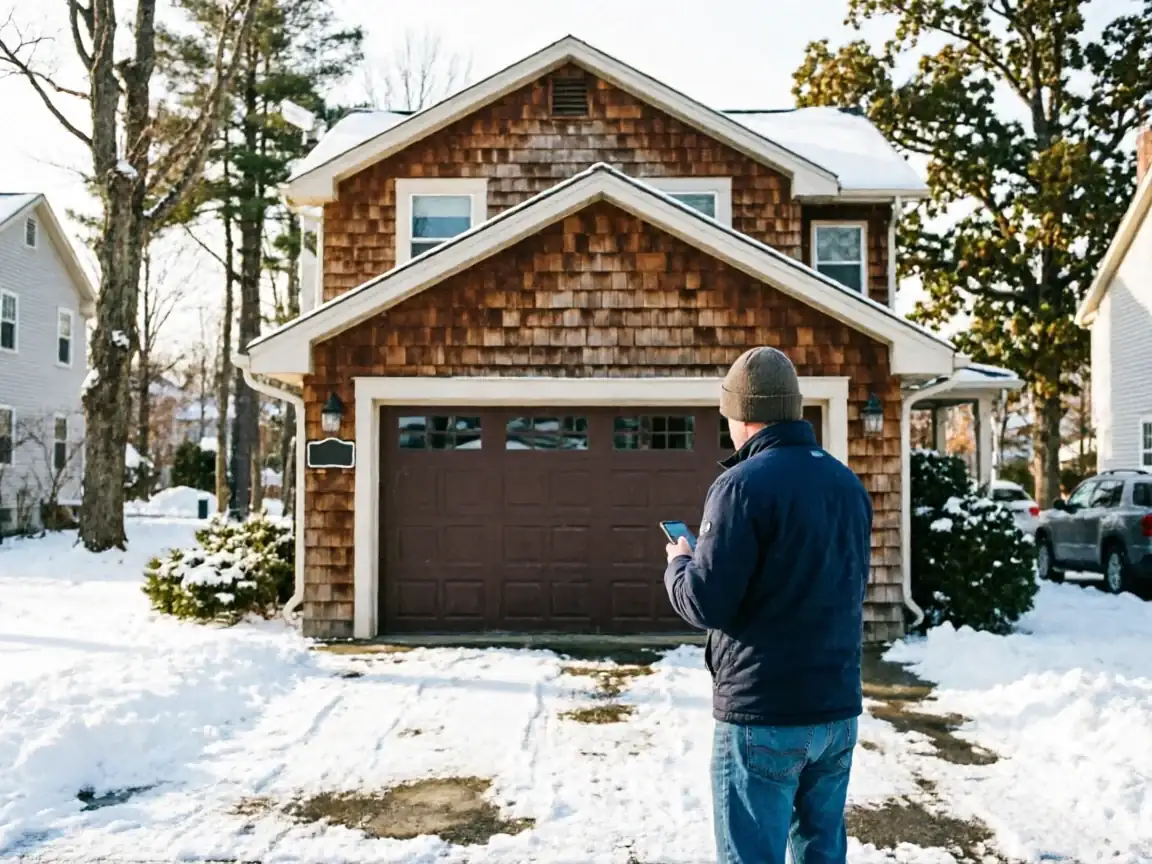
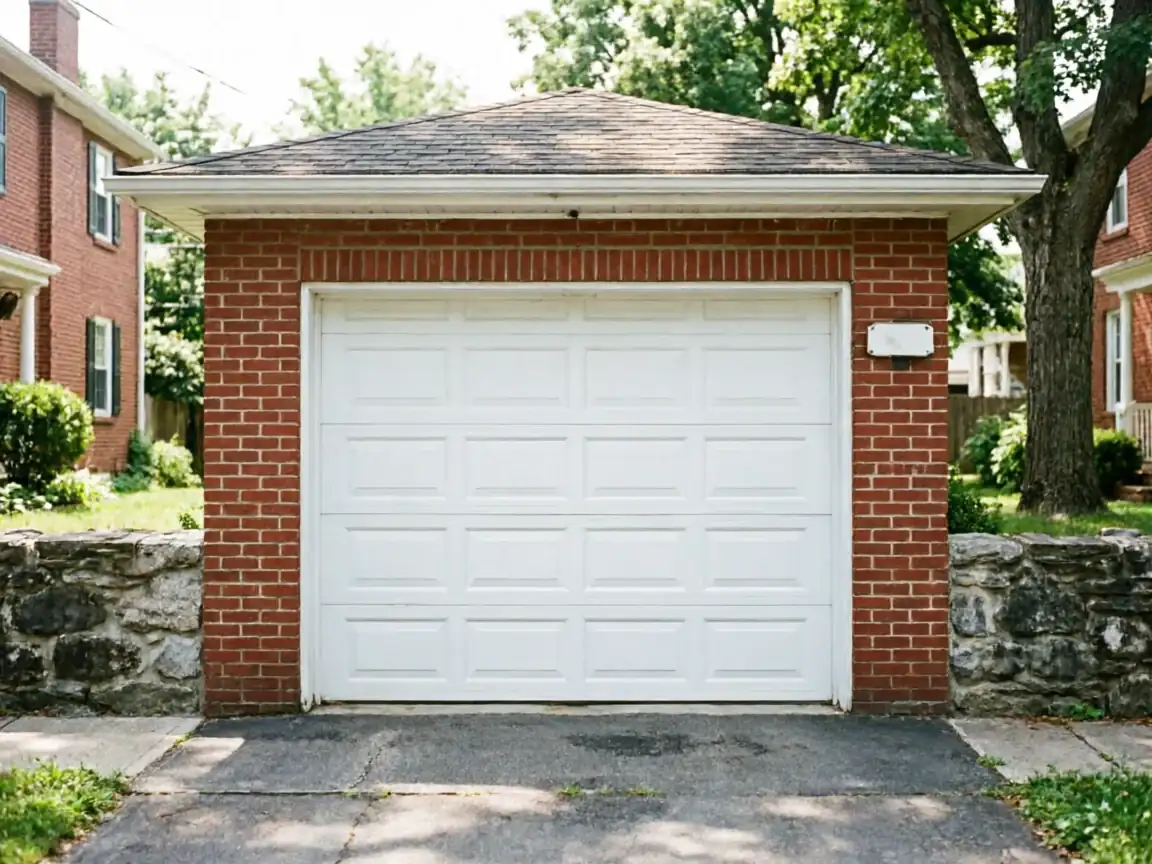
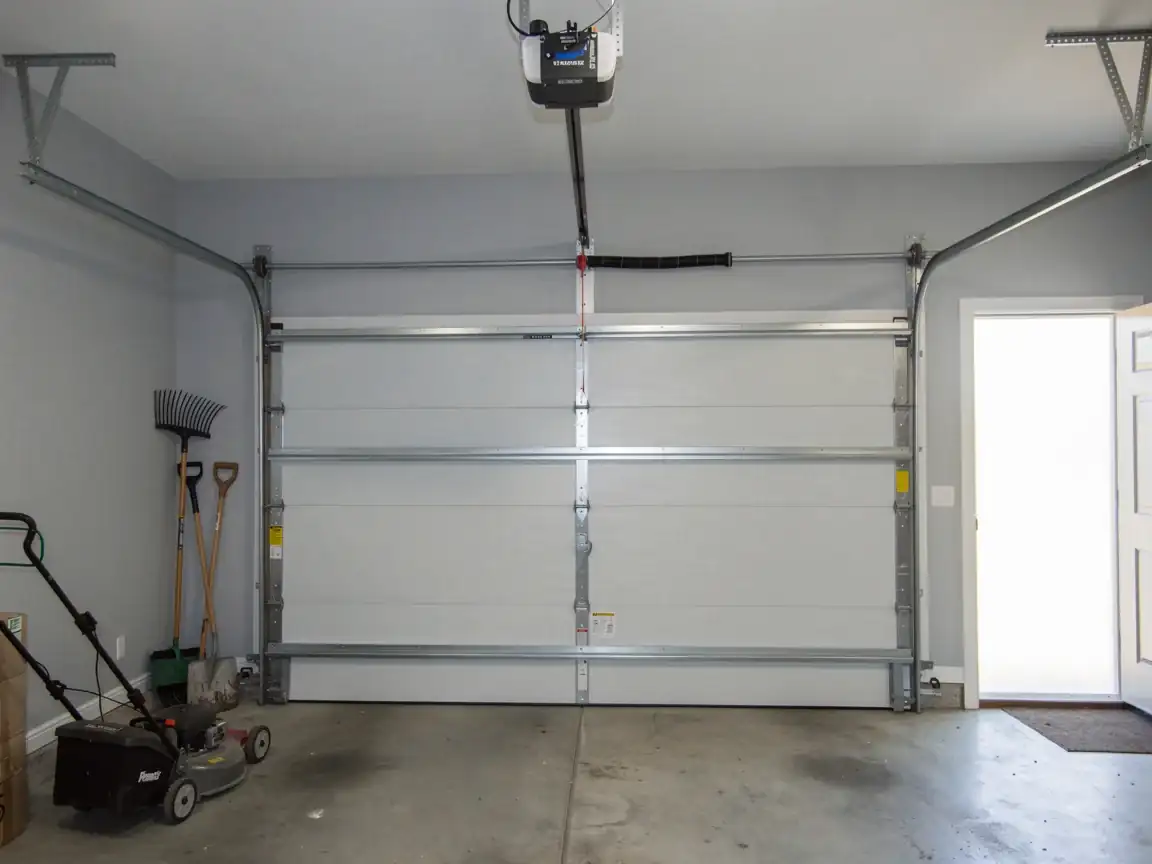
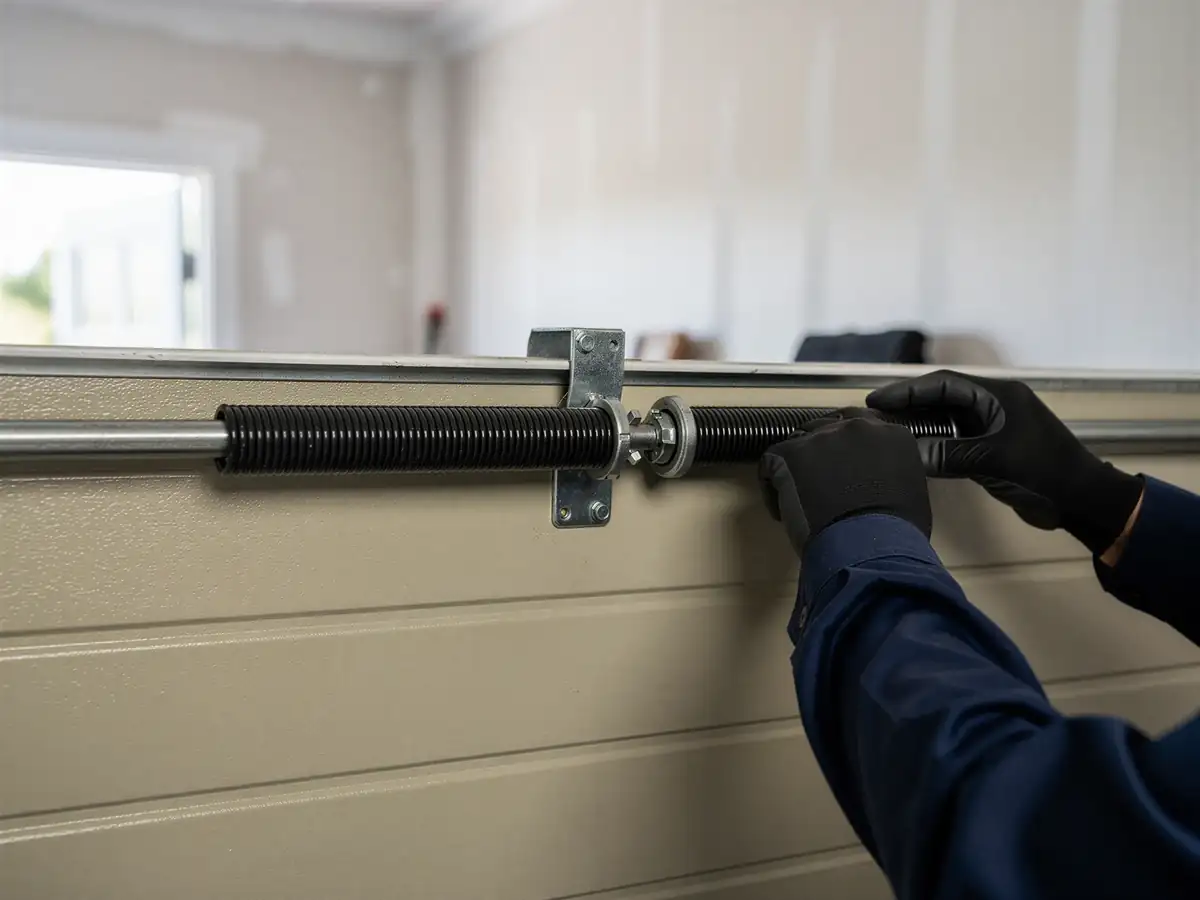
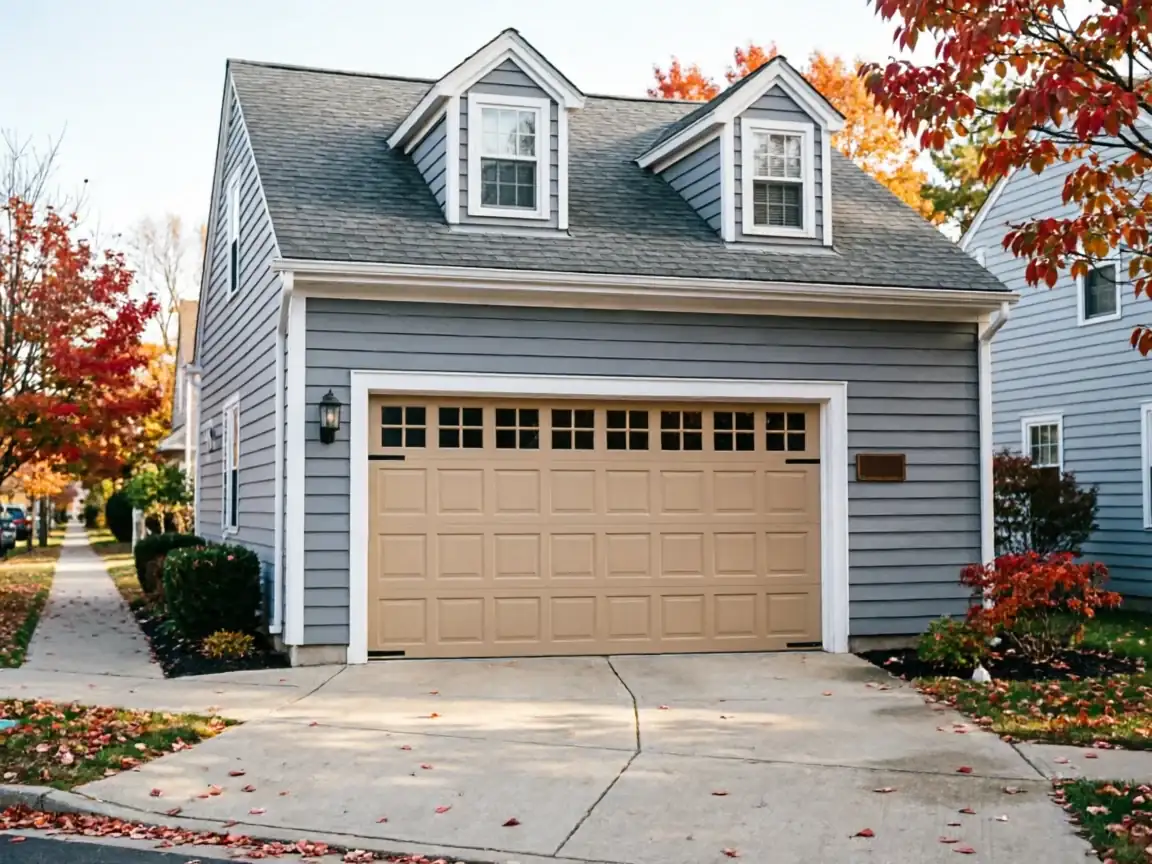
Most garage doors in Oak Hills went up around 1979, give or take a few years either side, which puts this neighborhood squarely in the steel sectional era - not the old one-piece slab doors you see on pre-war streets, and not the insulated two-layer doors builders started using later. These are single-layer steel panels, usually 16x7 for a two-car opening, hung on steel tracks with roller hardware that was standard for the period. The springs on a door this age are almost always torsion, mounted on a shaft above the opening, not the stretched extension springs you'd find on an older build.
The fault pattern follows from that. A steel panel from this era has had 45 winters of expansion and contraction, and in a cold-climate area that means rust at the bottom panel seams, hinges that have worked loose from repeated flexing, and rollers that have worn their track grooves wide enough to let the door walk and bind. None of this is dramatic - it's slow wear showing up now because the hardware is at the end of what it was built to do. We see it as a pattern, not a one-off, because a lot of Oak Hills went up in the same handful of years.
Parts We Carry
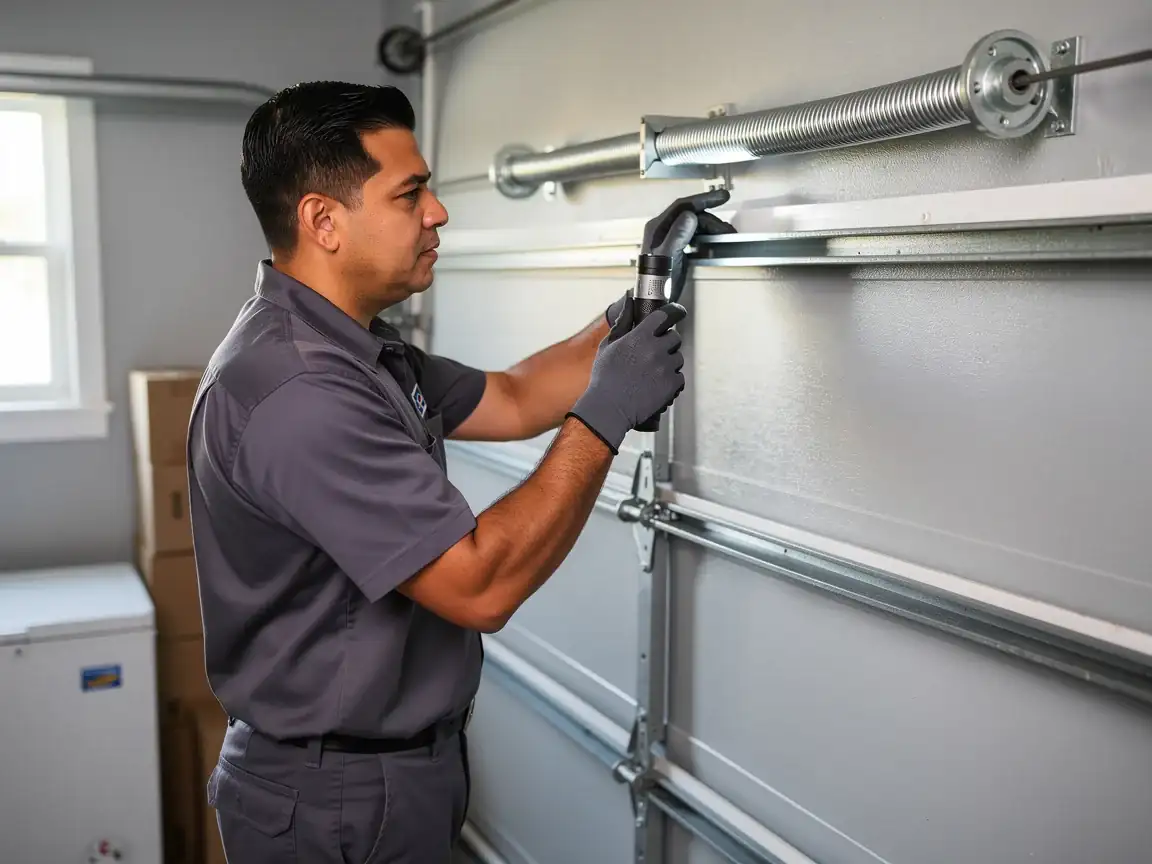
Torsion springs sized for a 16x7 steel door are common stock for us, along with the standard end bearings and center brackets that fail alongside them - when one spring goes on a door this age, the bearing it was riding on is usually not far behind. We also carry steel hinges and galvanized rollers in the sizes that match 1970s-spec track, so a worn roller doesn't turn into a track replacement.
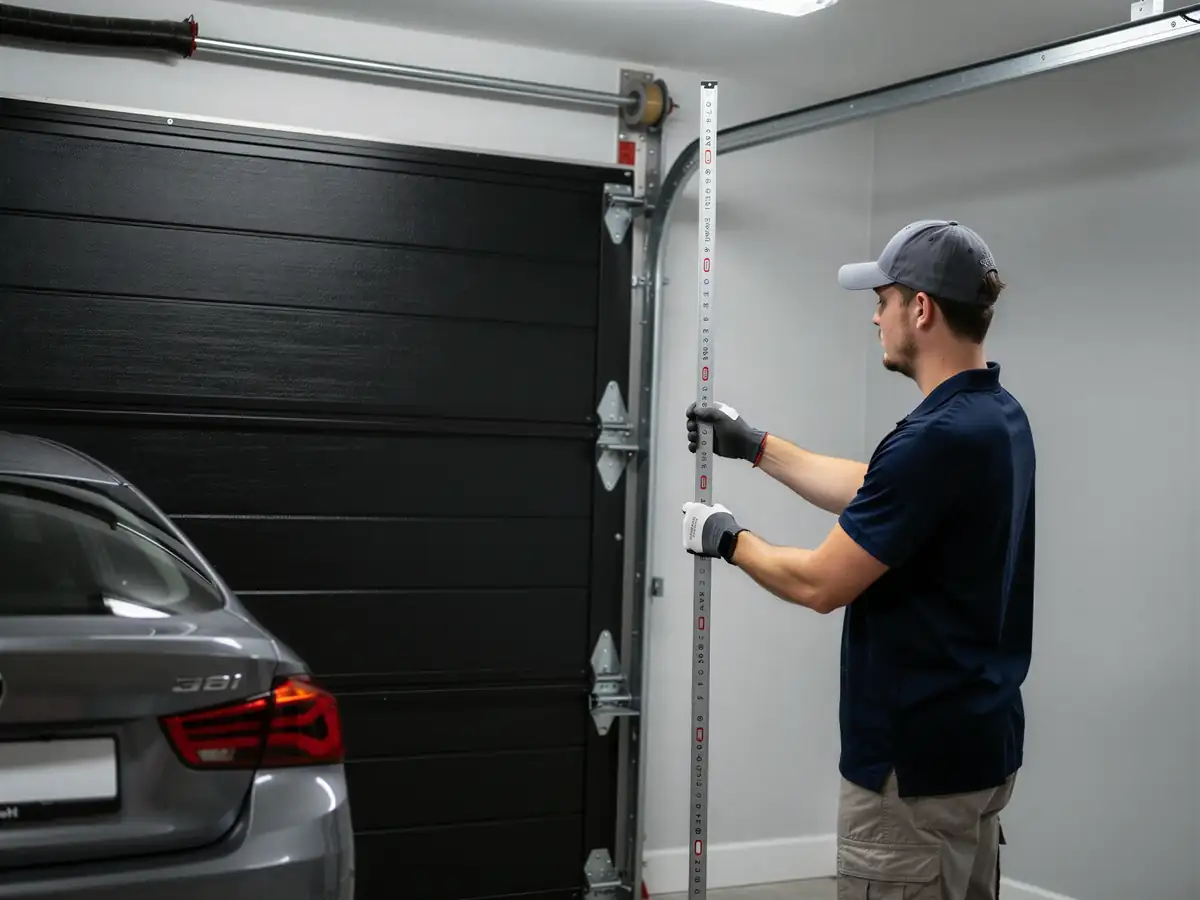
What we don't keep on the truck is anything specific to a door that's been modified or replaced since the original build - a homeowner who swapped in an insulated door at some point has different spring tension and sometimes a different track width, and that's a measure-first job, not a stock-part job. If your door has been replaced in the last decade or two, tell us that on the call so we bring the right spring instead of guessing from the house's age.
The DIY Question
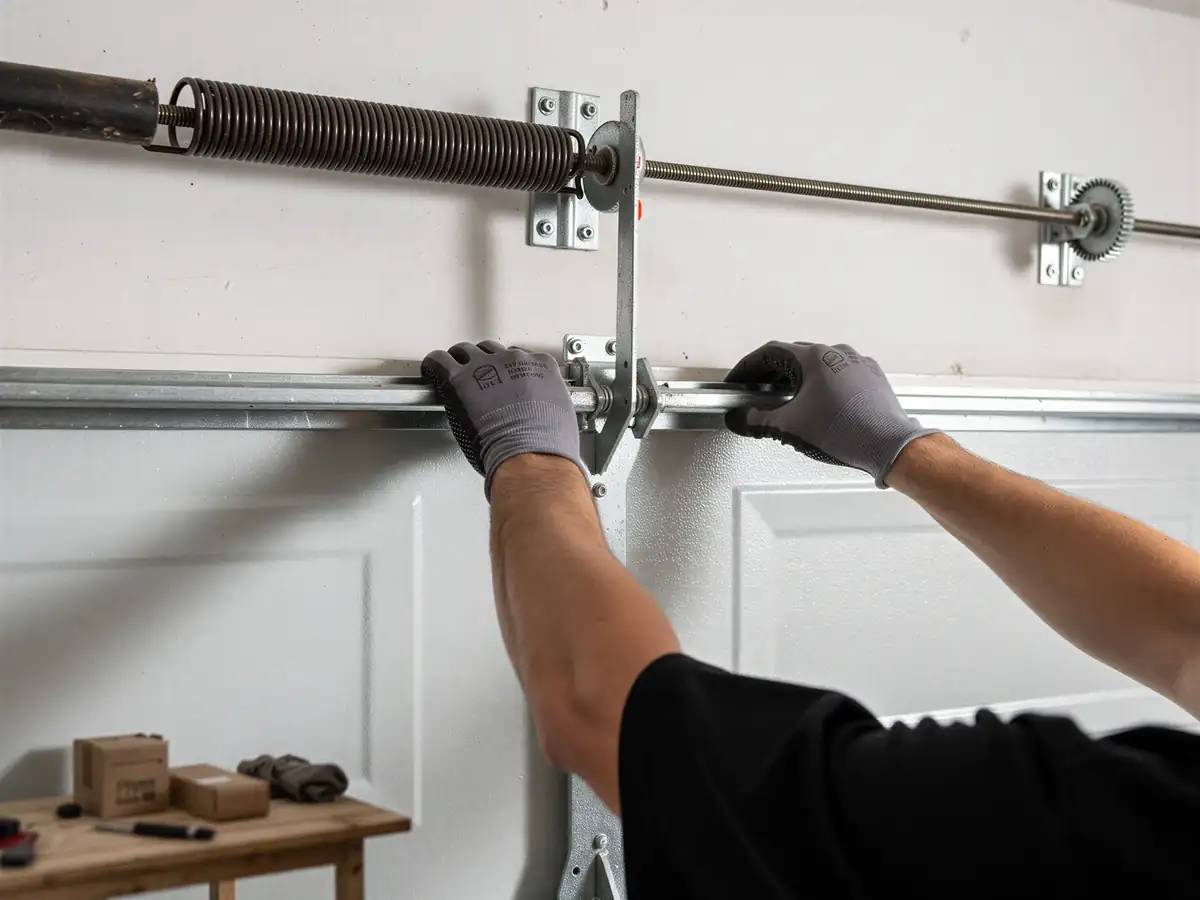
Torsion springs store enough force to break a jaw or a hand
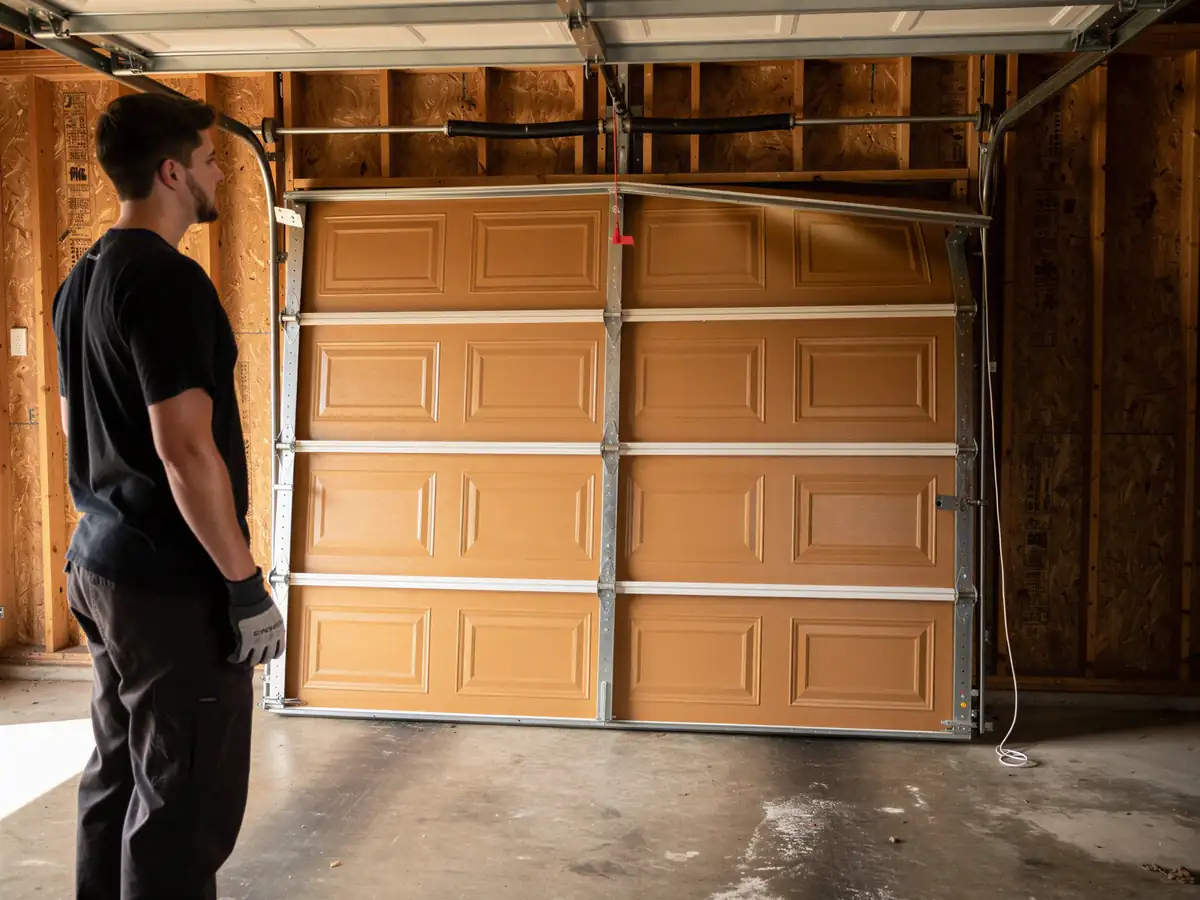
And that doesn't change because the door is 45 years old or three miles from Butler instead of thirty. If the spring is broken, leave it - the door will feel heavy and won't stay up on its own, and that's the spring doing nothing, not a sign you can muscle through it.
- 45 years
What you can reasonably check yourself
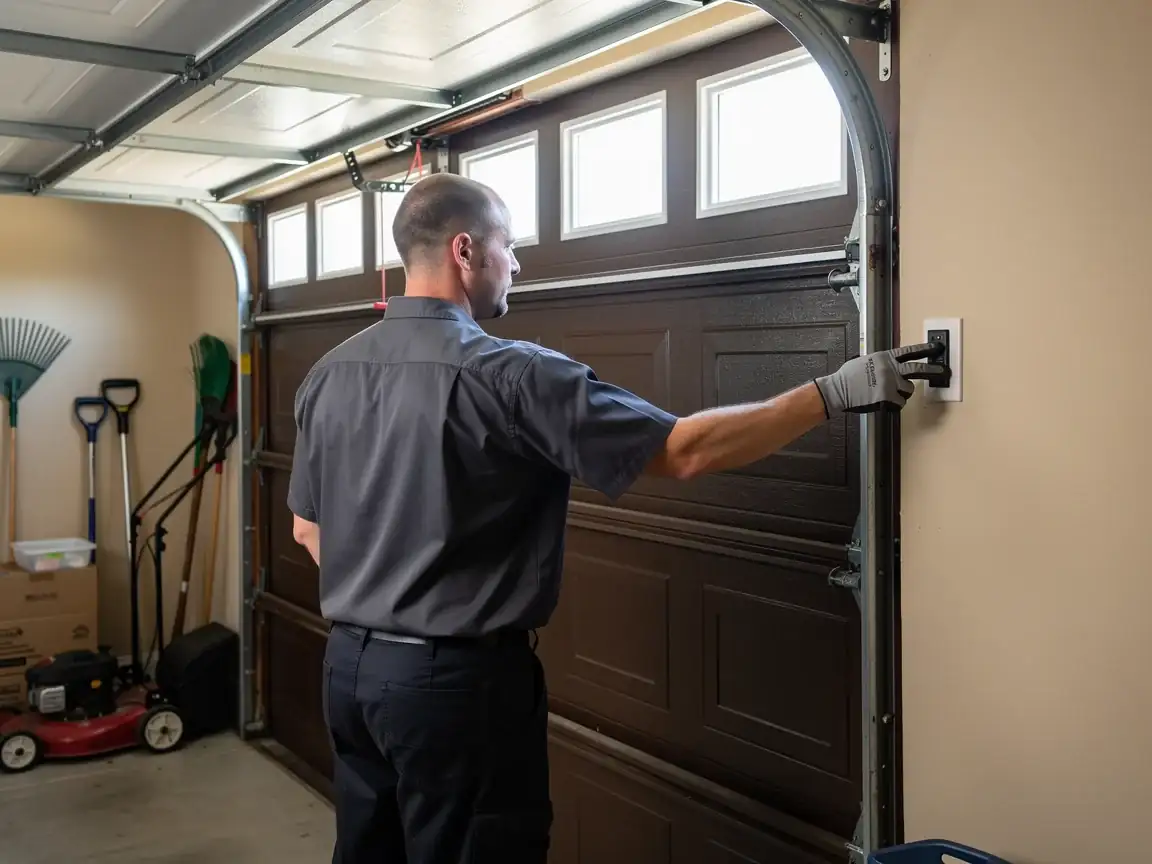
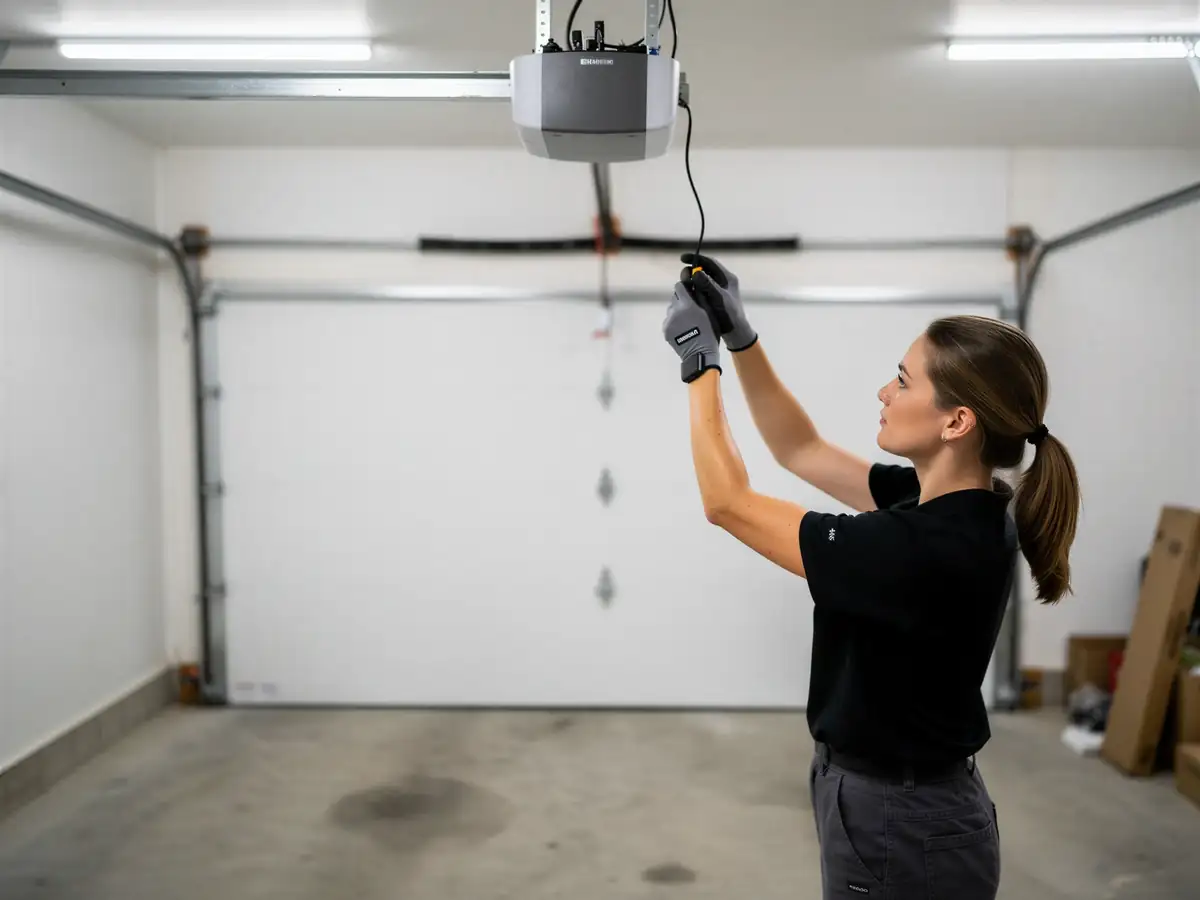
The photo-eye sensors near the floor track if the opener won't close, and whether the door is binding on one side versus lifting evenly, which tells you if it's a track issue versus a spring issue before you call. Lubricating hinges and rollers with a garage-door-specific lubricant is also fine for an owner to do and it's cheap insurance against the rust and friction that steel hardware from this era is prone to in a cold climate.
What the Fix Involves
A torsion spring replacement on a door this age usually means replacing both springs even if only one broke, since the second is carrying the same fatigue and will likely follow within a season. We also check the end bearings and center bracket while the shaft is exposed, because replacing a spring without checking the bearing it rides on just means a second call later.
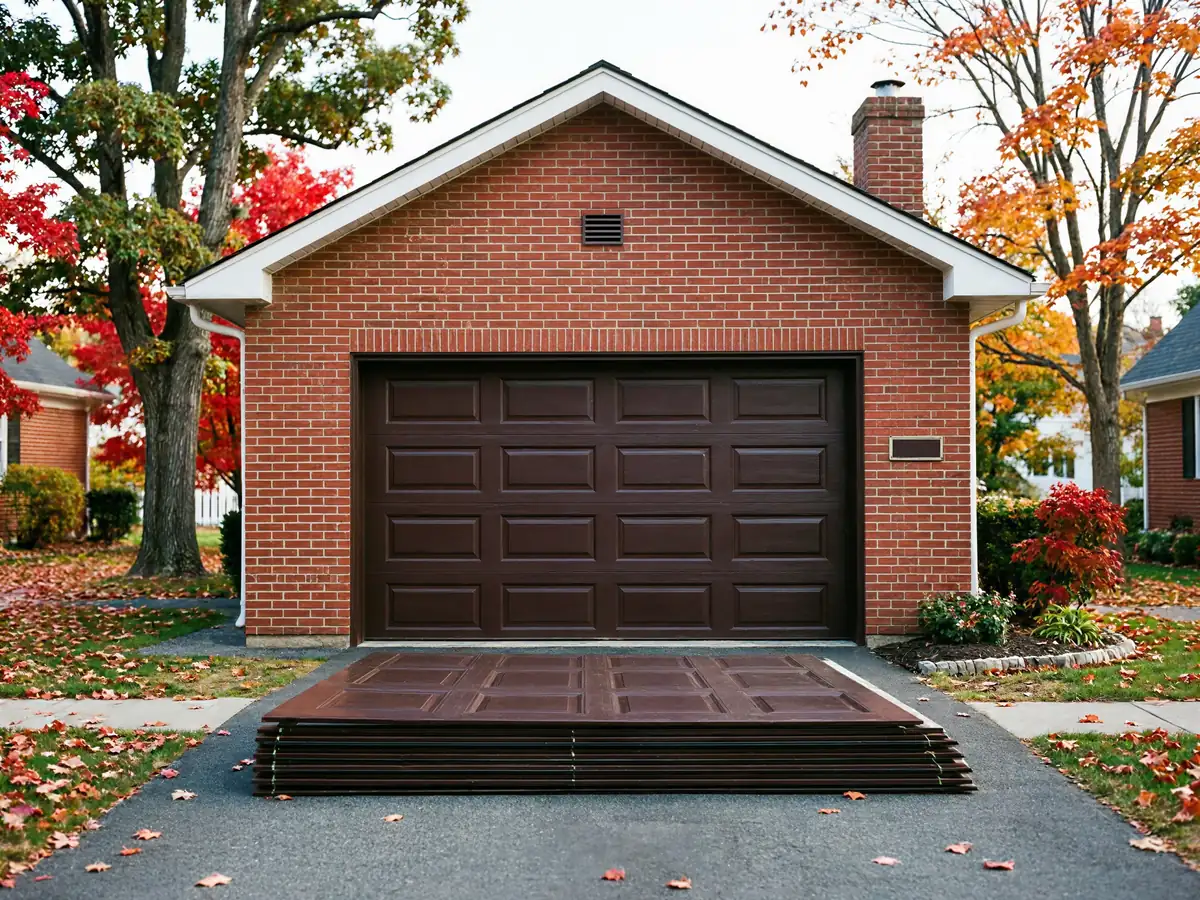
If the panels themselves have rusted through at the bottom seam - common enough on a steel door this age in a severe-winter climate - replacing the bottom panel alone is sometimes enough, but if more than one panel shows it, we'll tell you plainly when patching isn't worth it and a full door replacement is the better use of your money. We travel the job in from Butler; there's no branch location in Oak Hills itself, just the truck and the parts on it.